
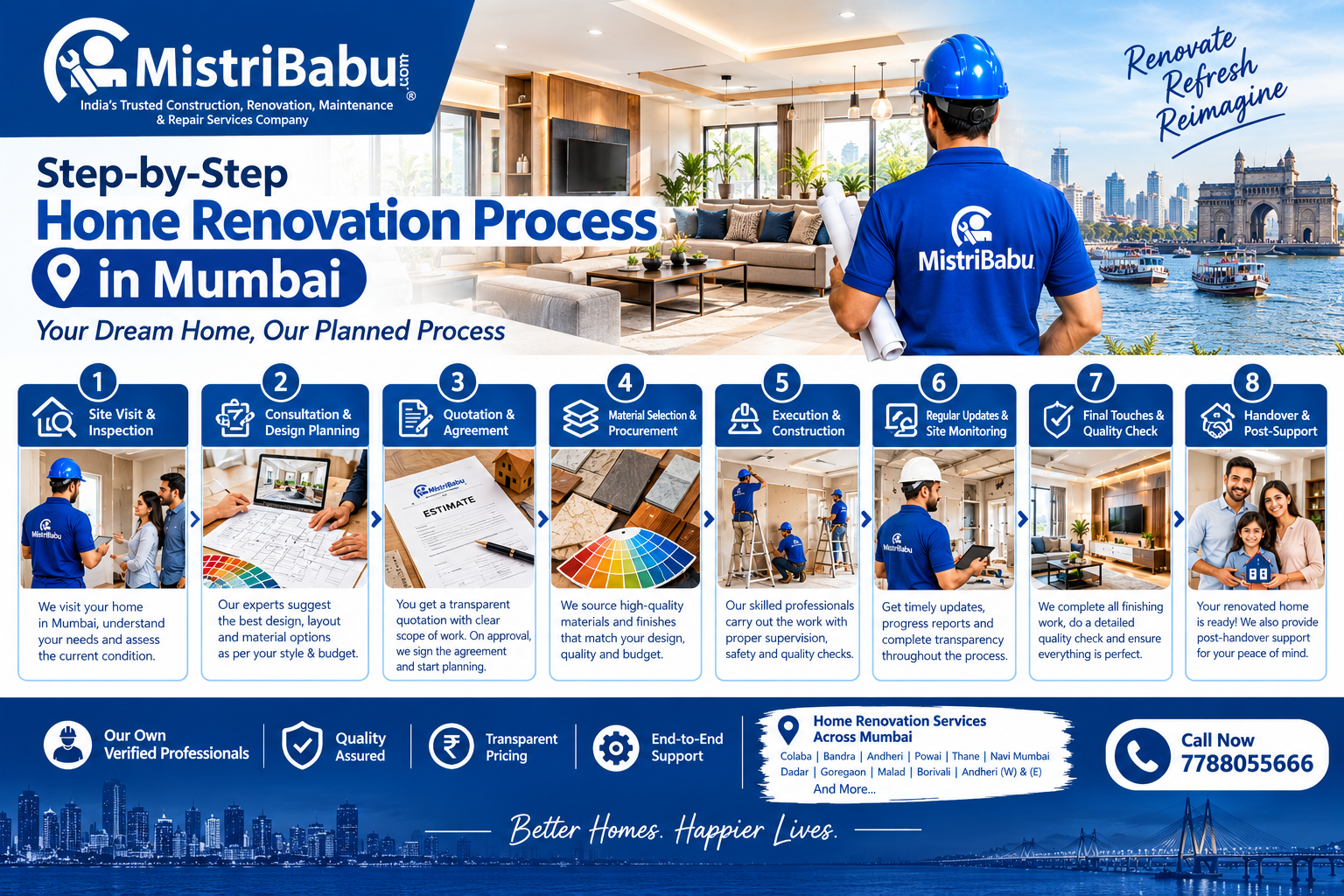
Home renovation in Mumbai is an exciting way to improve an old house, apartment, flat, bungalow, or residential property without necessarily moving to a new location. A properly planned renovation can improve functionality, modernize interiors, solve structural and maintenance problems, increase comfort, and give your home a completely new appearance.
However, renovation in Mumbai requires careful planning because properties can vary significantly—from old apartments and society flats in South Mumbai to residential buildings, bungalows, row houses and modern apartments across the western and eastern suburbs. Access restrictions, society permissions, building age, monsoon conditions, parking limitations, material transportation and working-hour restrictions can also affect the project.
This guide explains the step-by-step home renovation process in Mumbai, from the initial site inspection and budgeting to demolition, civil work, plumbing, electrical work, flooring, painting, modular interiors, cleaning and final handover.
What Is Home Renovation?
Home renovation means improving, repairing, modifying or upgrading an existing residential property.
Renovation may involve:
- Complete home renovation
- Partial home renovation
- Apartment renovation
- Flat renovation
- Old house renovation
- Bungalow renovation
- Kitchen renovation
- Bathroom renovation
- Bedroom renovation
- Living room renovation
- Interior renovation
- Flooring replacement
- Wall renovation
- Painting
- Plumbing replacement
- Electrical rewiring
- Waterproofing
- False ceiling
- Modular kitchen
- Wardrobe installation
- Door and window replacement
- Balcony renovation
- Terrace renovation
- Structural repair
- Seepage and leakage treatment
A renovation project can be small, such as repainting a flat, or extensive, involving demolition, new plumbing, electrical work, flooring, bathrooms, kitchen, carpentry, painting and complete interior upgrades.
Step-by-Step Home Renovation Process in Mumbai
Step 1: Identify Your Renovation Requirements
The first step is to understand exactly what needs to be renovated.
Walk through the entire property and prepare a list of problems and improvements.
Check:
- Walls
- Ceilings
- Floors
- Bathrooms
- Kitchen
- Bedrooms
- Living room
- Doors
- Windows
- Plumbing
- Electrical wiring
- Switchboards
- Water leakage
- Seepage
- Waterproofing
- Drainage
- Paint
- False ceiling
- Storage
- Balcony
- Terrace
- Modular furniture
- Lighting
- Ventilation
Separate the requirements into three categories:
Essential Work
These are works that should be completed for safety, functionality or maintenance.
Examples:
- Water leakage
- Damaged plumbing
- Electrical problems
- Waterproofing
- Broken tiles
- Damaged walls
- Structural deterioration
- Bathroom leakage
Functional Improvements
These improve the usability of the home.
Examples:
- Additional storage
- Modular kitchen
- Wardrobes
- Better lighting
- New electrical points
- Improved bathroom layout
- New flooring
Aesthetic Improvements
These improve the appearance.
Examples:
- Painting
- Wall textures
- Decorative lighting
- False ceiling
- Wallpaper
- Decorative panels
- New furniture
- Interior finishes
Step 2: Professional Site Inspection
After identifying the renovation requirements, arrange a professional site inspection.
A contractor, architect, interior designer or appropriate technical professional should inspect the property depending on the scope of work.
The inspection should cover:
- Existing floor plan
- Carpet/built-up area
- Wall conditions
- Ceiling condition
- Flooring
- Plumbing lines
- Drainage lines
- Electrical wiring
- Electrical load
- Water supply
- Bathroom waterproofing
- Kitchen plumbing
- Doors and windows
- Balcony
- Terrace
- Seepage
- Cracks
- Dampness
- Existing furniture
- Access for materials
- Lift availability
- Parking
- Society requirements
- Debris removal arrangements
For older properties, additional technical assessment may be required before undertaking major alterations.
Step 3: Check Building and Society Requirements
Mumbai has many apartment societies, cooperative housing societies, old buildings and managed residential complexes. Before starting renovation, check the rules applicable to your building.
Depending on the property and proposed work, you may need:
- Society permission
- Owner's consent
- Structural engineer's assessment
- Architect's drawings
- Applicable municipal permissions
- NOCs
- Work-time permissions
- Lift usage permission
- Debris disposal arrangements
The applicable requirements depend on the nature of the proposed work and the property.
For Greater Mumbai, BMC's development regulations cover development, redevelopment, additions and alterations, and certain repair categories have specific procedures. BMC also provides building-plan and repair-related services through its systems. Therefore, major structural or layout-related work should be checked against the applicable current regulations before execution.
For extensive repairs, BMC's regulations distinguish between different repair categories and may require documents such as notices, structural information, photographs, plans and applicable NOCs.
Important: Cosmetic interior work and structural alteration are not necessarily treated in the same way. Never assume that every type of renovation can be carried out without approval.
Step 4: Prepare the Renovation Design
Once the site inspection is completed, prepare the renovation design.
The design may include:
- Existing floor plan
- Proposed floor plan
- Furniture layout
- Kitchen layout
- Bathroom layout
- Electrical layout
- Lighting layout
- Plumbing layout
- Ceiling design
- Flooring pattern
- Wall treatment
- Storage design
- Wardrobe design
- Door design
- Colour scheme
- Material selection
For a complete renovation, 2D drawings and 3D views can help homeowners understand the proposed result before construction begins.
Step 5: Prepare a Detailed Renovation Estimate
A detailed estimate is one of the most important parts of renovation planning.
Instead of considering only the total project price, divide the estimate into work categories.
A typical renovation estimate may include:
| Work Category | Typical Scope |
|---|---|
| Site preparation | Protection and preparation |
| Demolition | Removing old finishes |
| Civil work | Masonry, plastering and repairs |
| Plumbing | Water and drainage lines |
| Electrical | Wiring, switches and points |
| Waterproofing | Bathroom, terrace and leakage treatment |
| Flooring | Tiles, marble, stone or other finishes |
| Wall finishing | Plaster, putty and repairs |
| Painting | Interior and exterior surfaces |
| False ceiling | Gypsum/PVC/other ceiling systems |
| Carpentry | Doors, wardrobes and storage |
| Modular kitchen | Cabinets, hardware and accessories |
| Bathroom | Sanitaryware, tiles and fittings |
| Windows | Repair or replacement |
| Lighting | Fixtures and installation |
| Cleaning | Final cleaning and debris removal |
The estimate should clearly mention:
- Material specifications
- Labour charges
- Quantity
- Unit rates
- Scope of work
- Exclusions
- Taxes, where applicable
- Payment schedule
- Project duration
- Warranty terms, where offered
- Debris disposal
- Additional-work procedure
Step 6: Finalize the Renovation Budget
Your renovation budget should include both planned work and a contingency amount.
Budget categories can include:
Civil Work
- Demolition
- Masonry
- Plastering
- Wall repair
- Floor preparation
- Concrete repair
Plumbing
- CPVC/PVC piping
- Drainage
- Bathroom plumbing
- Kitchen plumbing
- Water supply lines
- Faucets and fittings
Electrical
- Wiring
- Switches
- Sockets
- DB work
- MCBs
- Lighting points
- AC points
- Geyser points
- Appliance points
Finishing
- Tiles
- Marble
- Granite
- Paint
- Putty
- Wallpaper
- Wall panels
Interior
- Modular kitchen
- Wardrobes
- TV unit
- Storage cabinets
- False ceiling
- Decorative lighting
The final cost depends on the property's size, existing condition, material specifications, design, labour requirements and scope of renovation.
Step 7: Select Materials and Finishes
Material selection should be completed before major work begins wherever possible.
Select:
Flooring
- Vitrified tiles
- Ceramic tiles
- Porcelain tiles
- Marble
- Granite
- Wooden flooring
- Vinyl flooring
Wall Finishes
- Interior paint
- Exterior paint
- Texture paint
- Wallpaper
- PVC wall panels
- Decorative panels
Kitchen
- BWP/MR plywood or other suitable boards
- Laminates
- Acrylic
- Membrane finishes
- Quartz
- Granite
- Hardware
- Sink
- Accessories
Bathroom
- Wall tiles
- Floor tiles
- Sanitaryware
- Faucets
- Shower
- Health faucet
- Mirror
- Bathroom accessories
Choose materials according to the expected usage, moisture conditions, maintenance requirements and budget.
Step 8: Protect Existing Areas Before Work Starts
Before demolition, protect areas that are not being renovated.
Protection may include:
- Covering existing furniture
- Protecting lift interiors
- Covering common areas
- Protecting doors
- Protecting windows
- Covering floors
- Dust protection
- Temporary partitions
- Protection of electrical equipment
This is especially important for apartment renovations where workers and materials must move through common building areas.
Step 9: Demolition and Dismantling
Demolition is normally the first physical stage of a major renovation.
Possible demolition work includes:
- Removing old flooring
- Removing wall tiles
- Removing bathroom tiles
- Removing kitchen platforms
- Removing old cabinets
- Removing false ceiling
- Removing damaged plaster
- Removing old sanitaryware
- Removing old electrical fixtures
- Removing damaged doors
- Removing unwanted partitions
Demolition should be carried out carefully.
Do not remove structural walls, beams, columns, slabs or other structural elements without appropriate technical assessment and permission.
All demolition debris should be collected and disposed of according to applicable building and municipal requirements.
Step 10: Civil and Masonry Work
After demolition, civil work begins.
This may include:
- Brick/block masonry
- Partition walls
- Wall repairs
- Plastering
- Floor levelling
- Door openings
- Bathroom modification
- Kitchen modifications
- Chasing for services
- Repairing damaged surfaces
The objective is to create the correct base for plumbing, electrical and finishing work.
Step 11: Plumbing Work
Plumbing should be completed before closing walls and floors.
Typical plumbing renovation includes:
- Water supply lines
- Hot-water lines
- Bathroom pipelines
- Kitchen pipelines
- Drainage
- Wastewater lines
- Floor traps
- Toilet connections
- Wash basin connections
- Shower connections
- Washing-machine points
- Geyser connections
Old and damaged pipelines should be assessed before deciding whether to repair or replace them.
After installation, conduct appropriate testing before concealing the pipelines.
Step 12: Electrical Work
Electrical work is another major stage of renovation.
The electrical plan should consider present and future requirements.
Typical points include:
- Lights
- Fans
- Switches
- Sockets
- TV
- Wi-Fi/router
- Refrigerator
- Microwave
- Washing machine
- Geyser
- Air conditioner
- Chimney
- Hob
- Water purifier
- Exhaust fan
- Home-office equipment
For older properties, electrical wiring and distribution systems should be inspected by a qualified electrical professional before deciding the extent of replacement.
Step 13: Waterproofing
Waterproofing is particularly important in areas exposed to water.
Common waterproofing locations include:
- Bathrooms
- Toilets
- Balconies
- Terraces
- Kitchens
- Utility areas
- External walls
- Roof areas
- Areas affected by seepage
The correct waterproofing system depends on the location and source of water ingress.
The process can involve:
- Surface preparation
- Crack treatment
- Cleaning
- Primer or bonding treatment
- Waterproofing system
- Protective layer
- Testing
- Final finishing
Waterproofing should be completed before tiles or other finishes cover the treated surface.
Step 14: Bathroom Renovation
Bathroom renovation may involve complete dismantling and rebuilding.
Typical sequence:
- Remove old fixtures.
- Remove old wall and floor tiles.
- Repair the base.
- Modify plumbing.
- Complete waterproofing.
- Conduct waterproofing testing.
- Install floor and wall tiles.
- Install sanitaryware.
- Install faucets.
- Install shower fittings.
- Install mirror and accessories.
- Complete electrical and lighting work.
- Seal joints and edges.
- Clean and inspect.
Good bathroom renovation should focus on drainage slope, waterproofing, ventilation, plumbing accessibility and easy maintenance.
Step 15: Kitchen Renovation
Kitchen renovation usually involves both civil and interior work.
The process can include:
- Removing old cabinets
- Removing old platform
- Plumbing modification
- Electrical modifications
- Wall tiling
- Flooring
- Platform installation
- Sink installation
- Modular cabinets
- Drawer systems
- Hardware
- Chimney
- Hob
- Lighting
- Appliances
- Backsplash
- Final cleaning
The kitchen should be designed according to available space, workflow, storage requirements and appliance locations.
Step 16: Flooring Installation
After major wet work is completed and the base is ready, flooring can be installed.
Possible options include:
- Vitrified tiles
- Ceramic tiles
- Porcelain tiles
- Marble
- Granite
- Wooden flooring
- Vinyl
- Other approved flooring systems
The flooring contractor should check:
- Surface level
- Slope
- Tile layout
- Joint alignment
- Cutting requirements
- Skirting
- Door thresholds
- Drainage slopes
Bathroom floors require special attention to slope toward floor drains.
Step 17: Wall Plastering, Putty and Surface Preparation
After the service work is completed, walls are prepared for final finishing.
The process can include:
- Crack repair
- Plaster repair
- Surface levelling
- Putty
- Sanding
- Primer
- Sealing
- Final paint
Walls should be properly prepared before painting because paint cannot permanently hide serious dampness, cracks or defective surfaces.
Step 18: False Ceiling Installation
False ceilings can improve the appearance of living rooms, bedrooms and other areas.
Common options include:
- Gypsum ceiling
- PVC ceiling
- Grid ceiling
- Decorative ceiling
- Cove lighting
- Recessed lighting
Before closing the ceiling, coordinate:
- Electrical wiring
- AC piping
- Plumbing
- Fire/safety systems where applicable
- Lighting
- Access panels
Step 19: Doors and Windows
During renovation, existing doors and windows can be repaired, refinished or replaced.
Possible work includes:
- Main door renovation
- Internal door replacement
- Door polishing
- Laminate finish
- Hardware replacement
- Lock replacement
- Window repair
- Sliding window repair
- Glass replacement
- Mosquito mesh
- Aluminium windows
- uPVC windows
The choice depends on the building, design, budget and existing installation.
Step 20: Carpentry and Modular Interior Work
Carpentry generally starts after the major civil and wet works are substantially complete.
Possible installations include:
- Modular kitchen
- Wardrobes
- TV unit
- Shoe cabinet
- Crockery unit
- Study table
- Bookshelf
- Storage cabinets
- Bed back panels
- Dressing unit
- Utility cabinets
Important considerations include:
- Board quality
- Moisture resistance
- Hardware quality
- Edge finishing
- Hinges
- Drawer channels
- Internal storage
- Ventilation
- Ease of maintenance
Step 21: Interior and Exterior Painting
Painting is one of the final major finishing stages.
Interior Painting
Typical sequence:
- Surface preparation
- Crack repair
- Putty
- Sanding
- Primer
- First coat
- Final coat
- Touch-up
- Cleaning
Exterior Painting
Exterior surfaces require additional attention to:
- Dampness
- Cracks
- Weather exposure
- Waterproofing
- Surface preparation
- Exterior-grade coatings
For Mumbai properties, moisture and monsoon exposure should be considered when selecting exterior finishes.
Step 22: Lighting and Final Electrical Fixtures
Once ceilings, walls and furniture are ready, install final fixtures.
These can include:
- Ceiling lights
- Pendant lights
- Spotlights
- Profile lights
- Cove lights
- Wall lights
- Fans
- Switches
- Sockets
- Exhaust fans
- Decorative lighting
The final electrical inspection should confirm that all planned points are functioning properly.
Step 23: Final Plumbing Fixtures
Install and test:
- Wash basins
- Toilets
- Faucets
- Showers
- Health faucets
- Kitchen sink
- Geyser connections
- Washing-machine connections
- Water purifier
- Floor traps
- Drainage connections
Check for:
- Leakage
- Water pressure
- Drainage flow
- Blockage
- Sealant failure
- Incorrect slopes
Step 24: Final Quality Inspection
Before handover, conduct a room-by-room inspection.
Civil
- Wall cracks
- Floor levels
- Tile alignment
- Grouting
- Plaster finish
Plumbing
- Leakage
- Water pressure
- Drainage
- Bathroom fixtures
Electrical
- Switches
- Sockets
- Lights
- Fans
- AC points
- MCB/DB
Painting
- Shade consistency
- Paint marks
- Surface defects
- Touch-ups
Carpentry
- Doors
- Drawers
- Hinges
- Handles
- Alignment
- Laminate edges
Kitchen
- Cabinets
- Hardware
- Sink
- Plumbing
- Appliances
Bathroom
- Waterproofing
- Drainage
- Tiles
- Fixtures
- Sealant
Step 25: Deep Cleaning
After construction and installation are completed, the property should receive a detailed cleaning.
Cleaning may include:
- Floor cleaning
- Tile cleaning
- Glass cleaning
- Window cleaning
- Kitchen cleaning
- Bathroom cleaning
- Cabinet cleaning
- Dust removal
- Paint-mark removal
- Construction-debris removal
Professional post-renovation cleaning can make the property ready for occupancy.
Step 26: Final Handover
The final handover should happen only after the homeowner has inspected the completed work.
A handover checklist can include:
- Completed work list
- Pending work list, if any
- Final inspection
- Final measurement
- Final payment
- Product manuals
- Warranty documents where applicable
- Keys
- Drawings, if provided
- Maintenance information
- Cleaning completion
How Long Does Home Renovation Take in Mumbai?
The renovation duration depends on the size and complexity of the project.
A small renovation may take a few weeks, while a complete home renovation can take several months.
Factors affecting the timeline include:
- Property size
- Number of rooms
- Demolition requirements
- Plumbing modifications
- Electrical rewiring
- Waterproofing
- Flooring
- Kitchen work
- Bathroom renovation
- Carpentry
- Custom furniture
- Material availability
- Society working hours
- Lift availability
- Building access
- Approvals
- Monsoon conditions
- Client selections
- Changes during construction
A detailed work schedule should be prepared before starting.
Factors That Can Increase Home Renovation Cost in Mumbai
Renovation costs can vary considerably.
Major cost factors include:
1. Property Size
Larger properties require more materials, labour and finishing work.
2. Existing Property Condition
An old property requiring extensive demolition, plumbing and electrical replacement can cost more than a recently constructed apartment.
3. Material Quality
Tiles, sanitaryware, flooring, paint, hardware, plywood, laminates and fittings are available at different price points.
4. Design Complexity
Custom designs generally require more labour and fabrication.
5. Kitchen and Wardrobes
Modular interiors can form a significant portion of the renovation budget.
6. Bathroom Renovation
Complete bathroom renovation involves demolition, plumbing, waterproofing, tiles, sanitaryware and installation.
7. Waterproofing
Seepage and extensive waterproofing requirements can increase the project scope.
8. Structural Repairs
Structural repairs require appropriate technical assessment and specialist work.
9. Building Access
Difficult material access, restricted working hours and limited parking can affect labour and logistics.
10. Customisation
Custom furniture, special finishes and imported or premium materials can increase the overall budget.
Home Renovation in Mumbai During Monsoon
Mumbai's heavy rainfall makes moisture management particularly important.
Before and during renovation, inspect:
- Terrace
- External walls
- Balcony
- Windows
- Bathroom walls
- Plumbing shafts
- Roof
- Drainage
- Floor traps
- Seepage areas
Do not simply paint over damp walls. First identify and address the source of moisture.
Exterior waterproofing, roof treatment, plumbing repair and proper drainage may be required depending on the cause.
Common Home Renovation Mistakes to Avoid
1. Starting Without a Detailed Scope
A vague scope can lead to disputes and unexpected costs.
2. Choosing Materials at the Last Minute
Late selections can delay the project.
3. Ignoring Plumbing
Old hidden plumbing can create expensive problems after renovation.
4. Ignoring Electrical Capacity
Modern homes use many appliances. Electrical planning should account for current and future requirements.
5. Painting Over Seepage
The source of dampness should be identified before finishing.
6. Changing the Layout Without Technical Review
Removing or modifying walls can have structural and regulatory implications.
7. Not Planning Storage
Beautiful interiors can become difficult to use without adequate storage.
8. No Written Estimate
Always maintain a clear written scope and commercial agreement.
9. Making Frequent Design Changes
Changes after execution can increase cost and extend the schedule.
10. Not Checking Society Rules
Apartment societies can have specific requirements for renovation activities.
Home Renovation Services in Mumbai
A complete renovation company may provide:
- Home renovation
- Flat renovation
- Apartment renovation
- Bungalow renovation
- Villa renovation
- Kitchen renovation
- Bathroom renovation
- Living room renovation
- Bedroom renovation
- Interior renovation
- Civil work
- Masonry work
- Plumbing
- Electrical work
- Waterproofing
- Tile fixing
- Marble installation
- Granite work
- Flooring
- Painting
- False ceiling
- Carpenter work
- Modular kitchen
- Wardrobe
- Door work
- Window work
- Wall partition
- Wall panels
- Exterior renovation
- Terrace renovation
- Seepage treatment
- Crack repair
- Maintenance and repair
Home Renovation Areas in Mumbai
Home renovation services can be required throughout Mumbai City and Mumbai Suburban District.
South Mumbai
- Colaba
- Fort
- Churchgate
- Marine Drive
- Nariman Point
- Cuffe Parade
- Malabar Hill
- Walkeshwar
- Breach Candy
- Mahalaxmi
- Tardeo
- Grant Road
- Girgaon
- Charni Road
- Marine Lines
- Kalbadevi
- Bhuleshwar
- Masjid
- Byculla
- Mazgaon
- Dongri
- Parel
- Lower Parel
- Worli
- Prabhadevi
- Dadar
- Matunga
- Sion
Central Mumbai
- Dadar
- Matunga
- Sion
- Wadala
- Antop Hill
- Sewri
- Parel
- Lalbaug
- Curry Road
- Naigaon
- King Circle
- Maheshwari Udyan
- Chunabhatti
Western Suburbs
Bandra
- Bandra West
- Bandra East
- Khar West
- Khar East
- Santacruz West
- Santacruz East
Andheri
- Andheri West
- Andheri East
- Jogeshwari West
- Jogeshwari East
- Vile Parle West
- Vile Parle East
Goregaon
- Goregaon West
- Goregaon East
- Aarey
- Film City area
Malad
- Malad West
- Malad East
- Mindspace
- Malvani
Kandivali
- Kandivali West
- Kandivali East
- Mahavir Nagar
- Charkop
- Thakur Village
- Thakur Complex
Borivali
- Borivali West
- Borivali East
- IC Colony
- Gorai
- Dahisar
Dahisar
- Dahisar East
- Dahisar West
Eastern Suburbs of Mumbai
Kurla
- Kurla West
- Kurla East
- Kalina
- Chunabhatti
Ghatkopar
- Ghatkopar West
- Ghatkopar East
- Pant Nagar
- Garodia Nagar
Vikhroli
- Vikhroli West
- Vikhroli East
- Kannamwar Nagar
Powai
- Powai
- Hiranandani Gardens
- Chandivali
- IIT Bombay area
Bhandup
- Bhandup West
- Bhandup East
- Nahur
Mulund
- Mulund West
- Mulund East
- Nahur
- Johnson & Johnson area
Harbour Line and Eastern Mumbai Areas
- Chembur
- Govandi
- Mankhurd
- Trombay
- Wadala
- Sion
- Chunabhatti
- Tilak Nagar
- Ghatkopar
- Vikhroli
- Kurla
Navi Mumbai Home Renovation Areas
If your renovation service area includes the wider Mumbai Metropolitan Region, Navi Mumbai is also an important market.
Major locations include:
- Vashi
- Sanpada
- Juinagar
- Nerul
- Seawoods
- CBD Belapur
- Kharghar
- Kamothe
- Kalamboli
- Panvel
- New Panvel
- Ulwe
- Kopar Khairane
- Ghansoli
- Rabale
- Airoli
- Turbhe
- Taloja
Navi Mumbai is part of the Mumbai Metropolitan Region, which is much larger than the municipal limits of Greater Mumbai. MMRDA currently describes the MMR as covering 6,328 sq. km. and including Greater Mumbai, Thane, Kalyan-Dombivli, Navi Mumbai, Ulhasnagar, Bhiwandi-Nizampur, Vasai-Virar, Mira-Bhayandar and Panvel municipal corporations, together with several municipal councils and villages.
Thane Home Renovation Areas
For businesses serving the wider Mumbai region, Thane is another major renovation market.
Areas include:
- Thane West
- Thane East
- Ghodbunder Road
- Manpada
- Majiwada
- Wagle Estate
- Naupada
- Panch Pakhadi
- Vartak Nagar
- Pokhran Road
- Hiranandani Estate
- Kolshet
- Kasarvadavali
- Balkum
- Kalwa
- Mumbra
- Diva
Mira-Bhayandar Home Renovation Areas
- Mira Road East
- Mira Road West
- Bhayandar East
- Bhayandar West
- Uttan
- Bhayandar
- Beverly Park
- Shanti Nagar
Vasai-Virar Home Renovation Areas
- Vasai East
- Vasai West
- Nalasopara East
- Nalasopara West
- Virar East
- Virar West
- Naigaon East
- Naigaon West
Kalyan-Dombivli Home Renovation Areas
- Kalyan West
- Kalyan East
- Dombivli East
- Dombivli West
- Khadakpada
- Manpada
- MIDC Dombivli
- Nilje
- Titwala
Other Major MMR Locations
Depending on your service coverage, home renovation services can also be promoted in:
- Ulhasnagar
- Ambernath
- Badlapur
- Bhiwandi
- Panvel
- Kharghar
- Taloja
- Kamothe
- Kalamboli
- Ulwe
- Karjat
- Khopoli
- Uran
- Alibaug
- Pen
- Palghar
- Vasai
- Virar
These locations fall within the wider Mumbai Metropolitan Region framework, although individual municipal and planning authorities differ by location.
Why Choose a Professional Home Renovation Company in Mumbai?
A professional renovation company can coordinate multiple trades under one project.
This can simplify:
- Site inspection
- Design coordination
- Estimation
- Material planning
- Civil work
- Plumbing
- Electrical
- Waterproofing
- Flooring
- Painting
- Carpentry
- Modular interiors
- Quality control
- Project scheduling
- Final handover
For homeowners, the biggest benefit of coordinated renovation is having a clearly defined scope rather than separately managing multiple contractors.
Complete Home Renovation Checklist
Before starting:
☐ Site inspection completed
☐ Renovation requirements listed
☐ Existing condition documented
☐ Design finalized
☐ Material specifications selected
☐ Detailed estimate prepared
☐ Society requirements checked
☐ Applicable permissions checked
☐ Work schedule prepared
☐ Payment terms agreed
☐ Demolition plan prepared
☐ Debris disposal arranged
During renovation:
☐ Demolition completed safely
☐ Civil work completed
☐ Plumbing installed and tested
☐ Electrical work completed and tested
☐ Waterproofing completed and tested
☐ Flooring installed
☐ Wall finishing completed
☐ False ceiling installed
☐ Kitchen installed
☐ Wardrobes installed
☐ Doors/windows completed
☐ Painting completed
☐ Lighting installed
Before handover:
☐ Plumbing checked
☐ Electrical checked
☐ Tile joints checked
☐ Paint checked
☐ Carpentry checked
☐ Kitchen checked
☐ Bathroom checked
☐ Waterproofing/seepage checked
☐ Final cleaning completed
☐ Snag list closed
☐ Final handover completed
Home Renovation in Mumbai with MistriBabu
MistriBabu provides construction, renovation, maintenance and repair solutions for residential and commercial properties.
Homeowners planning renovation can consider a complete project covering:
- Home renovation
- Flat renovation
- Apartment renovation
- Bathroom renovation
- Kitchen renovation
- Civil work
- Plumbing
- Electrical
- Waterproofing
- Flooring
- Tile installation
- Painting
- False ceiling
- Carpenter work
- Modular kitchen
- Wardrobes
- Interior work
- Door and window work
- Seepage treatment
- Crack repair
- Property inspection
- Renovation consultancy
For a complete renovation, the project should begin with a proper site inspection and detailed scope rather than starting individual works without coordination.
Conclusion
A successful home renovation in Mumbai requires more than selecting attractive tiles, paint colours and furniture. The project should be planned from the existing condition of the property through design, budgeting, permissions, demolition, civil work, plumbing, electrical work, waterproofing, flooring, painting, carpentry, interiors, quality inspection and final handover.
Whether you are renovating an apartment in Bandra, Andheri, Powai, Ghatkopar, Mulund, Borivali, Kandivali, Malad, Goregaon, Dadar, Worli, Lower Parel, Thane, Navi Mumbai, Mira Road, Vasai-Virar, Kalyan-Dombivli or another Mumbai-region location, a systematic renovation process can help control quality, cost and project coordination.
The most important principle is simple: inspect first, plan properly, define the scope, select materials carefully, execute work in the correct sequence, test hidden services before closing them, and complete a detailed final inspection before handover.
For major structural, extensive repair or layout-alteration work, always verify the current requirements with the applicable municipal/planning authority and qualified professionals before beginning work.

MistriBabu
Admin