
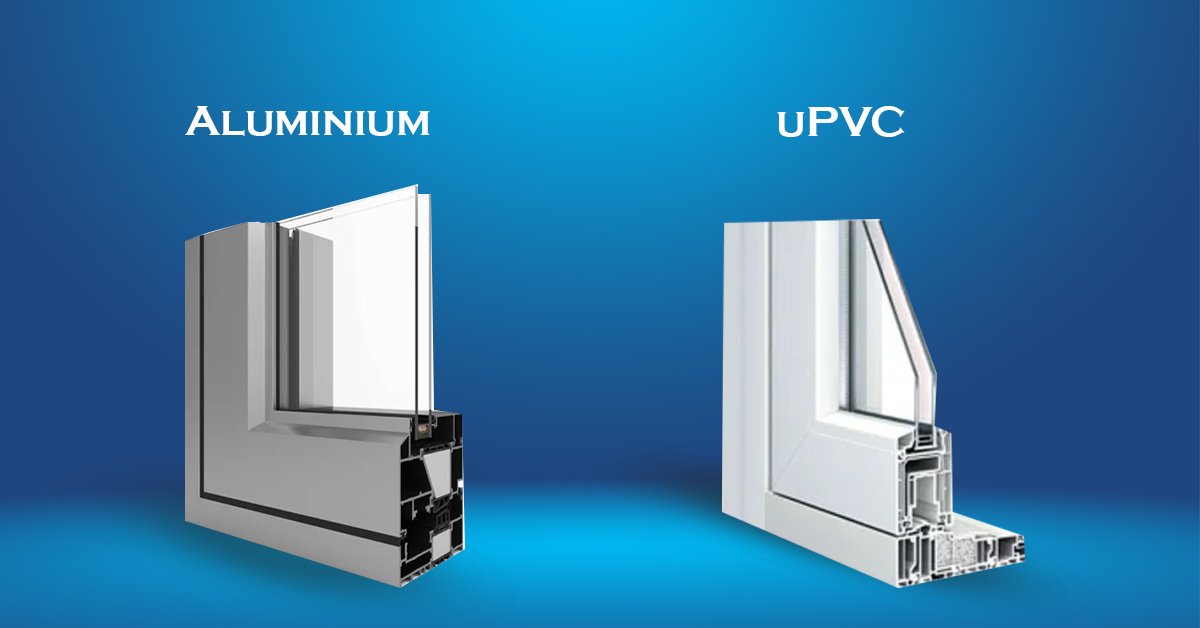
Choosing the right windows is an important decision when constructing, renovating or upgrading a home, apartment, villa, office or commercial building. Windows affect heat gain, cooling requirements, ventilation, noise, natural light, maintenance, durability, appearance and overall comfort.
Two of the most popular choices in India are uPVC windows and aluminium windows. Both have their own advantages and limitations, and the right choice depends on the building design, glass specification, window size, location, exposure to rain or sunlight, coastal conditions and local climate.
India has very different climatic conditions—from the hot and dry regions of Rajasthan and Gujarat to the warm and humid coastal areas of Odisha, Kerala and Maharashtra, the composite climate of Delhi and Uttar Pradesh, and the cold regions of Jammu & Kashmir, Ladakh and Himachal Pradesh.
This guide explains the difference between uPVC and aluminium windows, their advantages and disadvantages, maintenance requirements, thermal performance, suitability for different Indian climates, and their use across major states, districts and cities.
1. What Are uPVC Windows?
uPVC stands for Unplasticized Polyvinyl Chloride. It is a rigid polymer material commonly used for manufacturing modern doors and windows.
uPVC window systems normally consist of:
- uPVC frame and sash profiles
- Steel reinforcement where required
- Glass panels
- Rubber gaskets
- EPDM seals
- Locking mechanisms
- Rollers and handles
- Drainage channels
- Glazing beads
uPVC profiles generally have multiple internal chambers. These chambers help reduce heat transfer through the frame and can contribute to better thermal insulation.
For homes where thermal comfort, low maintenance and resistance to moisture are important, properly designed uPVC windows can be a practical option.
2. What Are Aluminium Windows?
Aluminium windows are manufactured using aluminium profiles, which are lightweight and structurally strong.
A typical aluminium window includes:
- Aluminium frame
- Aluminium sash
- Glass
- EPDM or other suitable seals
- Rollers
- Handles
- Locking systems
- Drainage provisions
- Glazing accessories
Aluminium is particularly useful where large glass areas, slim frames, modern appearance and structural strength are important.
Modern aluminium systems can also incorporate thermal breaks, which significantly change the thermal performance compared with conventional non-thermal-break aluminium systems.
Therefore, it is important not to compare all aluminium windows as if they have identical performance.
3. uPVC vs Aluminium Windows: Quick Comparison
| Feature | uPVC Windows | Aluminium Windows |
|---|---|---|
| Basic material | Rigid polymer | Aluminium |
| Thermal insulation | Generally good | Conventional systems generally lower; thermal-break systems can perform much better |
| Frame weight | Relatively lightweight | Lightweight for its strength |
| Structural strength | Good for normal residential applications | Excellent, particularly for larger openings |
| Large glass openings | Good, depending on system | Very good |
| Slim frames | Moderate | Excellent |
| Corrosion | Does not rust; suitable for wet environments | Aluminium itself does not rust like steel, but finish, hardware and environment matter |
| Moisture resistance | Very good | Very good |
| Maintenance | Low | Low |
| Painting | Usually not required | Powder coating/anodising generally provides finish |
| Appearance | Modern, clean | Modern, slim and premium |
| Thermal expansion | Higher than aluminium | Lower than uPVC |
| Design flexibility | Good | Very high |
| Large sliding doors | Available in suitable systems | Excellent choice for large openings |
| Coastal applications | Good with suitable hardware | Good with appropriate alloy, coating and hardware |
| Initial cost | Depends on system and specification | Depends greatly on system and specification |
| Best suited for | Homes, apartments, offices | Homes, villas, offices and large openings |
Important: Window performance depends not only on the frame material but also on glass type, frame design, air leakage, sealing, installation quality, orientation and shading.
4. Major Difference: Thermal Insulation
One of the biggest differences between conventional aluminium and uPVC is thermal conductivity.
Aluminium conducts heat much more readily than uPVC. This means a basic non-thermal-break aluminium frame can transfer outdoor heat into a building more easily.
uPVC has relatively low thermal conductivity, so it generally provides better insulation through the frame.
However, modern aluminium systems can incorporate a thermal break between sections of the aluminium frame. This reduces heat transfer and can substantially improve thermal performance.
Therefore:
Basic aluminium vs uPVC: uPVC generally has an insulation advantage.
Thermal-break aluminium vs uPVC: the difference can become much smaller and depends on the complete window system.
5. Glass Is Just as Important as the Frame
Many homeowners compare only the frame material. This can lead to an incomplete decision.
A window consists of both:
Frame + Glass + Seals + Hardware + Installation
For example, a high-quality uPVC frame with unsuitable single clear glass may not provide the desired thermal or solar-control performance.
Similarly, a well-designed aluminium system with suitable double glazing, low-E glass and thermal breaks can provide strong overall performance.
Depending on the building and climate, options can include:
- Single glazing
- Double glazing
- Laminated glass
- Toughened glass
- Low-E glass
- Tinted glass
- Solar-control glass
- Acoustic laminated glass
For energy-conscious buildings, glass selection should be considered together with window orientation, shading and the building envelope. BEE's building-energy guidance specifically considers climate and building-envelope performance.
6. uPVC Windows: Advantages
6.1 Good Thermal Insulation
uPVC frames generally provide good resistance to heat transfer.
This can be useful in areas where summer temperatures are high and air-conditioning is frequently used.
6.2 Low Maintenance
uPVC normally does not require regular painting.
Routine maintenance generally involves:
- Cleaning the frame
- Cleaning the glass
- Checking drainage holes
- Cleaning tracks
- Lubricating suitable hardware
- Inspecting seals
6.3 Good Moisture Resistance
uPVC is not susceptible to rust in the way ferrous metals are. This makes it useful for humid and rainy environments when the complete system is correctly specified.
6.4 Good for Residential Buildings
uPVC is commonly considered for:
- Apartments
- Independent houses
- Villas
- Bedrooms
- Living rooms
- Kitchens
- Bathrooms
- Balconies
- Renovation projects
6.5 Noise Reduction Potential
With appropriate frame construction, seals and acoustic glass, uPVC windows can provide good sound insulation.
The actual result depends heavily on glass thickness, laminated glass, air gaps, seals and installation.
7. uPVC Windows: Limitations
uPVC is not automatically the best choice for every application.
Potential limitations include:
- Less suitable than some aluminium systems for very large openings
- Wider-looking frame profiles in some designs
- Thermal expansion can be significant
- Quality varies considerably between manufacturers
- Reinforcement and hardware specifications are important
- Poor-quality profiles can deteriorate faster under severe exposure
- Large sliding systems require proper engineering
For very large doors or floor-to-ceiling glazing, an appropriately engineered aluminium system may offer more design flexibility.
8. Aluminium Windows: Advantages
8.1 High Strength
Aluminium provides a strong frame relative to its weight.
This makes aluminium attractive for:
- Large windows
- Sliding doors
- Balcony doors
- Floor-to-ceiling glazing
- Commercial buildings
- Modern villas
- Office buildings
8.2 Slim Profiles
Aluminium systems can provide narrow sightlines, allowing a larger glass area.
This creates a contemporary architectural appearance.
8.3 Excellent Design Flexibility
Aluminium can be used in numerous configurations, including:
- Sliding windows
- Casement windows
- Fixed windows
- Top-hung windows
- Tilt-and-turn systems
- Folding doors
- Sliding doors
- Large glazed openings
8.4 Thermal-Break Aluminium
Premium aluminium systems can incorporate thermal breaks.
This separates the inner and outer aluminium sections using a low-conductivity material, reducing thermal bridging.
For air-conditioned homes and premium buildings, thermal-break aluminium can be worth considering.
9. Aluminium Windows: Limitations
Conventional aluminium frames have higher thermal conductivity than uPVC.
Possible disadvantages include:
- Greater heat transfer through the frame
- Conventional systems may have lower thermal performance
- Condensation can be a concern in certain cold or high-humidity conditions
- Quality of powder coating/anodising matters
- Coastal environments require appropriate finish and hardware
- Premium thermal-break systems can cost considerably more
The exact performance depends on the aluminium alloy, profile design, thermal break, glass, seals and installation.
10. uPVC vs Aluminium for Hot and Dry Climate
Hot-dry regions experience strong solar radiation, high daytime temperatures and relatively dry conditions.
Examples include:
- Rajasthan
- Parts of Gujarat
- Parts of Maharashtra
- Parts of Madhya Pradesh
- Parts of Telangana and Andhra Pradesh
Major locations include:
Rajasthan
- Jaisalmer
- Barmer
- Jodhpur
- Bikaner
- Jaipur
- Kota
- Ajmer
- Udaipur
- Sikar
- Sri Ganganagar
Gujarat
- Ahmedabad
- Vadodara
- Rajkot
- Surat
- Bhuj
- Jamnagar
- Mehsana
- Gandhinagar
Maharashtra
- Aurangabad/Chhatrapati Sambhajinagar
- Solapur
- Nagpur
- Akola
- Amravati
Climate Consideration
For hot and dry areas, the important factors are:
- Solar heat gain
- Window orientation
- External shading
- Glass specification
- Air leakage
- Frame insulation
A well-specified uPVC window can provide good thermal insulation. Aluminium can also perform well when a suitable system and solar-control glass are selected.
The official Indian building-energy climate classification identifies cities such as Ahmedabad, Bikaner, Jaisalmer, Jodhpur, Kota, Solapur and Vadodara within the hot-dry category in its referenced city classification.
11. uPVC vs Aluminium for Warm and Humid Climate
Warm-humid regions experience:
- High humidity
- Heavy rainfall
- Moisture
- Long monsoon periods
- Relatively small day-night temperature variation
Examples include:
- Odisha
- Kerala
- West Bengal
- Goa
- Coastal Karnataka
- Coastal Andhra Pradesh
- Tamil Nadu
- Coastal Maharashtra
- Parts of Assam and Northeast India
Odisha
Important locations include:
- Bhubaneswar
- Cuttack
- Puri
- Khordha
- Kendrapara
- Jagatsinghpur
- Jajpur
- Balasore
- Bhadrak
- Paradeep
- Nayagarh
- Ganjam
- Berhampur
- Sambalpur
- Rourkela
West Bengal
- Kolkata
- Howrah
- Durgapur
- Siliguri
- Asansol
- Kharagpur
- Haldia
- Digha
Kerala
- Kochi
- Thiruvananthapuram
- Kozhikode
- Thrissur
- Kollam
- Kannur
- Alappuzha
- Kottayam
- Palakkad
Karnataka
- Mangaluru
- Udupi
- Bengaluru
- Hubballi
- Belagavi
- Mysuru
Maharashtra
- Mumbai
- Thane
- Navi Mumbai
- Ratnagiri
- Pune
- Kolhapur
- Nagpur
Climate Consideration
In warm-humid and coastal areas, consider:
- Water drainage
- Weather seals
- Hardware quality
- Corrosion resistance
- Proper installation
- Glass solar control
- Ventilation
- Frame durability
uPVC can be an attractive option for residential buildings because of its moisture resistance and thermal insulation.
Aluminium is also widely suitable, particularly where slim frames and large openings are desired. In coastal locations, the aluminium alloy, surface treatment, hardware and installation quality should be selected for the exposure conditions.
BEE/ECBC classifications identify Bhubaneswar, Mumbai, Kolkata, Kochi, Mangaluru, Chennai, Panaji, Pune and several other cities as warm-humid in the cited classification.
12. uPVC vs Aluminium for Composite Climate
Composite climates experience significant seasonal variation.
A location may experience:
- Hot summers
- Monsoon rainfall
- Cooler winters
- Dry periods
- Significant temperature variation
Major examples include:
Delhi NCR
- New Delhi
- Gurugram
- Noida
- Ghaziabad
- Faridabad
- Greater Noida
Uttar Pradesh
- Lucknow
- Kanpur
- Agra
- Varanasi
- Prayagraj
- Meerut
- Ghaziabad
- Gorakhpur
- Bareilly
- Moradabad
- Aligarh
- Saharanpur
Madhya Pradesh
- Bhopal
- Indore
- Jabalpur
- Gwalior
- Ujjain
- Sagar
- Rewa
Punjab
- Amritsar
- Ludhiana
- Jalandhar
- Patiala
- Bathinda
Haryana
- Gurugram
- Faridabad
- Hisar
- Panipat
- Karnal
- Rohtak
- Ambala
Rajasthan
- Jaipur
- Ajmer
- Kota
- Alwar
- Bharatpur
- Udaipur
Bihar
- Patna
- Gaya
- Muzaffarpur
- Bhagalpur
- Darbhanga
Jharkhand
- Ranchi
- Jamshedpur
- Dhanbad
- Bokaro
- Deoghar
Chhattisgarh
- Raipur
- Bilaspur
- Durg
- Bhilai
- Korba
Climate Consideration
Composite climates require windows that can handle both summer heat and cooler winter conditions.
uPVC can provide good thermal insulation, while aluminium systems with thermal breaks and suitable glazing can also provide strong thermal performance.
New Delhi, Lucknow, Chandigarh, Jaipur, Hyderabad, Bhopal, Ranchi and several other cities are classified as composite in the cited Indian climate classification.
13. uPVC vs Aluminium in Temperate Climate
Temperate areas generally have relatively moderate climatic conditions compared with extreme hot-dry or cold regions.
A major example is:
Karnataka
- Bengaluru
- Mysuru
- Tumakuru
- Hassan
- Chikkaballapur
- Shivamogga
Bengaluru is identified as a temperate climate example in India's building-energy guidance.
In temperate locations, the choice can be based more heavily on:
- Design
- Window size
- Ventilation
- Noise control
- Maintenance
- Budget
- Glass specification
- Architectural appearance
Both uPVC and aluminium can work well when properly designed.
14. uPVC vs Aluminium for Cold Climate
Cold regions require special attention to heat loss, air leakage, condensation and glazing.
Examples include:
Jammu & Kashmir
- Srinagar
- Gulmarg
- Anantnag
- Baramulla
- Pahalgam
- Kupwara
Ladakh
- Leh
- Kargil
Himachal Pradesh
- Shimla
- Manali
- Kullu
- Dharamshala
- Solan
- Mandi
- Chamba
Uttarakhand
- Dehradun
- Mussoorie
- Nainital
- Almora
- Rishikesh
Northeast / Hill Regions
- Shillong
- Tawang
- Gangtok
- Kalimpong
Climate Consideration
In cold climates, the window system should be selected according to:
- Low heat transfer
- Good air tightness
- Double or triple glazing where appropriate
- Low-E glass where appropriate
- Quality seals
- Thermal-break frames
- Correct installation
- Condensation control
uPVC can provide good thermal insulation. Premium thermal-break aluminium systems can also be used successfully when paired with suitable glazing and seals.
Cold-climate cities such as Leh, Manali, Shillong, Srinagar, Kullu and Udhagamandalam are included in the cited Indian climate classification.
15. State-Wise uPVC vs Aluminium Window Consideration
Andhra Pradesh
Major cities:
- Visakhapatnam
- Vijayawada
- Guntur
- Tirupati
- Nellore
- Kurnool
- Rajahmundry
- Kakinada
Coastal areas require good water management, sealing and corrosion-resistant hardware.
Arunachal Pradesh
Locations:
- Itanagar
- Tawang
- Naharlagun
- Pasighat
Cold and high-rainfall areas require careful weather sealing and thermal considerations.
Assam
Locations:
- Guwahati
- Dibrugarh
- Jorhat
- Silchar
- Tezpur
High rainfall and humidity make drainage, sealing and hardware selection important.
Bihar
Locations:
- Patna
- Gaya
- Bhagalpur
- Muzaffarpur
- Darbhanga
- Purnia
Composite climatic conditions make thermal insulation and ventilation important.
Chhattisgarh
Locations:
- Raipur
- Bilaspur
- Durg
- Bhilai
- Korba
- Jagdalpur
Goa
Locations:
- Panaji
- Margao
- Vasco da Gama
- Mapusa
Coastal exposure requires careful hardware and surface-finish selection.
Gujarat
Locations:
- Ahmedabad
- Surat
- Vadodara
- Rajkot
- Gandhinagar
- Jamnagar
- Bhuj
- Anand
Hot conditions and strong solar exposure make glass and shading particularly important.
Haryana
Locations:
- Gurugram
- Faridabad
- Hisar
- Rohtak
- Panipat
- Karnal
- Ambala
Composite conditions make thermal performance important.
Himachal Pradesh
Locations:
- Shimla
- Manali
- Kullu
- Solan
- Dharamshala
- Mandi
Cold-weather glazing and air sealing should receive special attention.
Jharkhand
Locations:
- Ranchi
- Jamshedpur
- Dhanbad
- Bokaro
- Deoghar
Karnataka
Locations:
- Bengaluru
- Mysuru
- Mangaluru
- Udupi
- Hubballi
- Belagavi
- Tumakuru
Both uPVC and aluminium can be considered depending on design and window size.
Kerala
Locations:
- Kochi
- Thiruvananthapuram
- Kozhikode
- Thrissur
- Kollam
- Kannur
- Alappuzha
Warm-humid and coastal conditions make weather sealing, drainage and corrosion-resistant hardware important.
Madhya Pradesh
Locations:
- Bhopal
- Indore
- Gwalior
- Jabalpur
- Ujjain
- Sagar
Maharashtra
Locations:
- Mumbai
- Pune
- Nagpur
- Nashik
- Thane
- Navi Mumbai
- Aurangabad/Chhatrapati Sambhajinagar
- Kolhapur
- Solapur
- Ratnagiri
Odisha
Locations:
- Bhubaneswar
- Cuttack
- Puri
- Khordha
- Jajpur
- Kendrapara
- Jagatsinghpur
- Balasore
- Bhadrak
- Ganjam
- Berhampur
- Nayagarh
- Sambalpur
- Rourkela
- Paradeep
For Odisha's warm-humid and coastal conditions, proper drainage, seals, hardware and installation are particularly important.
Punjab
Locations:
- Amritsar
- Ludhiana
- Jalandhar
- Patiala
- Bathinda
- Mohali
Rajasthan
Locations:
- Jaipur
- Jodhpur
- Jaisalmer
- Bikaner
- Kota
- Ajmer
- Udaipur
- Alwar
- Sikar
- Barmer
Hot-dry locations need attention to solar heat gain, shading and glazing.
Tamil Nadu
Locations:
- Chennai
- Coimbatore
- Madurai
- Salem
- Tiruchirappalli
- Tirunelveli
- Vellore
- Erode
- Thoothukudi
- Thanjavur
Coastal and warm-humid areas require good weather sealing and appropriate hardware.
Telangana
Locations:
- Hyderabad
- Warangal
- Karimnagar
- Nizamabad
- Khammam
- Ramagundam
Uttar Pradesh
Locations:
- Lucknow
- Kanpur
- Agra
- Noida
- Ghaziabad
- Greater Noida
- Varanasi
- Prayagraj
- Meerut
- Gorakhpur
- Bareilly
- Moradabad
- Aligarh
- Saharanpur
Uttarakhand
Locations:
- Dehradun
- Haridwar
- Rishikesh
- Nainital
- Mussoorie
- Haldwani
- Almora
West Bengal
Locations:
- Kolkata
- Howrah
- Siliguri
- Durgapur
- Asansol
- Kharagpur
- Haldia
The exact climate of a district can vary by elevation, geography and local conditions, so the nearest applicable climatic classification and actual site exposure should be considered rather than treating an entire state as having one climate.
16. uPVC vs Aluminium for Coastal Areas
Coastal cities experience:
- High humidity
- Salt-laden air
- Heavy rain
- Strong sunlight
- Wind exposure
Examples include:
- Mumbai
- Navi Mumbai
- Thane
- Goa
- Mangaluru
- Kochi
- Chennai
- Visakhapatnam
- Puri
- Paradeep
- Bhubaneswar region
- Cuttack region
- Surat
- Ratnagiri
- Thiruvananthapuram
For coastal construction, don't select a window solely by asking whether it is "uPVC" or "aluminium."
Check:
- Hardware quality
- Fasteners
- Surface treatment
- Seal quality
- Drainage
- Glass specification
- Installation
- Exposure to sea air
A properly specified aluminium system can work well in coastal areas, while uPVC can also be suitable. The complete system matters.
17. uPVC vs Aluminium for High-Rise Buildings
High-rise buildings have different requirements from individual houses.
Important considerations include:
- Wind load
- Structural design
- Window size
- Glass weight
- Water penetration
- Air infiltration
- Safety glass
- Hardware
- Building movement
- Façade design
- Installation method
For large high-rise windows and façade systems, aluminium is often attractive because of its strength and ability to accommodate large glazed openings.
However, the selection must be based on the project's structural and façade requirements.
18. uPVC vs Aluminium for Sliding Windows
Sliding windows are popular in:
- Bedrooms
- Balconies
- Living rooms
- Kitchens
- Apartments
- Offices
uPVC sliding windows can provide good thermal insulation.
Aluminium sliding windows can offer:
- Slim profiles
- Strong frames
- Large glass panels
- Smooth modern appearance
- Greater flexibility for larger openings
For large sliding doors, premium aluminium systems may be particularly suitable.
19. uPVC vs Aluminium for Bedrooms
Bedrooms often benefit from:
- Noise reduction
- Thermal insulation
- Good sealing
- Easy operation
- Low maintenance
A properly designed uPVC window with double glazing can be a good choice.
An aluminium window with thermal break and acoustic/insulating glass can also provide excellent performance.
The best specification depends on the location, road noise, sun exposure and air-conditioning requirements.
20. uPVC vs Aluminium for Living Rooms
Living rooms often require larger windows for:
- Natural light
- Ventilation
- Outdoor views
- Balcony access
- Architectural appearance
For moderate openings, both materials can work well.
For very large openings, aluminium often provides greater structural flexibility.
21. uPVC vs Aluminium for Bathrooms and Kitchens
Bathrooms and kitchens have high moisture exposure.
Important features include:
- Water-resistant frames
- Good drainage
- Weather seals
- Corrosion-resistant hardware
- Easy cleaning
Both uPVC and aluminium can be used.
Proper installation and drainage are more important than choosing the frame material alone.
22. Which Is More Durable?
Durability depends on:
- Material quality
- Profile design
- Reinforcement
- Glass
- Hardware
- Installation
- UV exposure
- Weather exposure
- Cleaning and maintenance
A high-quality window system installed correctly can provide long service life.
A low-quality window can develop problems regardless of whether it is uPVC or aluminium.
Therefore, always evaluate the complete window system, not only the material name.
23. Which Requires Less Maintenance?
Both systems can be relatively low maintenance.
uPVC Maintenance
- Clean frames periodically
- Clean glass
- Clean tracks
- Check drainage
- Inspect seals
- Lubricate moving hardware
Aluminium Maintenance
- Clean profiles
- Clean tracks
- Inspect seals
- Check drainage
- Maintain hardware
- Check surface finish
- Clean coastal salt deposits more frequently where applicable
Neither should be considered completely maintenance-free.
24. Which Is Better for Rainy Areas?
In heavy-rainfall locations, the most important factors are:
- Correct profile design
- Proper drainage
- Good gaskets
- Weather seals
- Correct glass installation
- Proper frame alignment
- Correct sill detailing
- Professional installation
A good-quality uPVC or aluminium system can be used successfully in rainy areas.
25. Which Is Better for Noise Reduction?
Noise reduction is influenced by the complete window assembly.
Important factors include:
- Glass thickness
- Laminated glass
- Double glazing
- Air gap
- Frame sealing
- Number of opening joints
- Installation quality
For roads, airports, railway lines and busy urban areas, consider acoustic glass rather than choosing a frame based only on material.
A properly sealed uPVC system can provide good acoustic performance, while aluminium systems with suitable seals and glazing can also perform well.
26. Which Is Better for Modern Homes?
For modern architectural designs:
uPVC
Suitable when priorities include:
- Thermal insulation
- Low maintenance
- Residential comfort
- Weather resistance
- Traditional and modern designs
Aluminium
Suitable when priorities include:
- Slim profiles
- Large glass
- Minimalist architecture
- Large sliding doors
- Contemporary villas
- Commercial buildings
27. What About Energy Efficiency?
Energy efficiency depends on the entire building envelope.
A window's performance is influenced by:
Frame + Glass + Solar Heat Gain + Air Leakage + Orientation + Shading + Installation
BEE's energy-efficiency guidance recognizes climate-specific building performance, and Indian building-energy codes consider climate when setting performance requirements.
Therefore, selecting a window should not be based only on whether it is "uPVC" or "aluminium."
28. Important Factors to Check Before Buying Windows
Before ordering windows, ask the supplier or contractor for:
Profile
- Profile brand
- Profile thickness
- Number of chambers for uPVC
- Aluminium profile series
- Thermal-break specification where applicable
Glass
- Glass thickness
- Single/double glazing
- Toughened glass
- Laminated glass
- Low-E glass
- Solar-control glass
- Acoustic glass
Hardware
- Handle quality
- Locks
- Rollers
- Hinges
- Friction stays
- Multipoint locking where applicable
Seals
- EPDM/rubber gasket specification
- Weather seals
- Compression quality
Installation
- Frame fixing
- Waterproofing
- Silicone/sealant
- Sill detailing
- Drainage
- Alignment
- Expansion provisions
29. Common Mistakes When Choosing Windows
Mistake 1: Choosing Only by Price
The cheapest window may not provide the best long-term performance.
Mistake 2: Ignoring Glass
The frame is only one part of the window.
Mistake 3: Ignoring Installation
Even a premium window can leak if it is installed incorrectly.
Mistake 4: Choosing a Large Window Without Structural Consideration
Large glass panels require proper engineering.
Mistake 5: Ignoring Local Climate
Delhi, Bhubaneswar, Mumbai, Jaipur and Srinagar have very different climatic requirements.
Mistake 6: Ignoring Coastal Exposure
Coastal locations need suitable hardware and finishes.
Mistake 7: Assuming Every Aluminium Window Is the Same
Conventional aluminium and thermal-break aluminium systems can have significantly different thermal characteristics.
30. uPVC vs Aluminium: Climate-Wise Selection Guide
| Indian Climate | Important Requirement | uPVC | Aluminium |
|---|---|---|---|
| Hot-Dry | Solar control + insulation | Very suitable | Suitable; thermal break beneficial |
| Warm-Humid | Sealing + drainage + humidity resistance | Suitable | Suitable with proper finish/hardware |
| Composite | Summer + winter performance | Suitable | Thermal-break system beneficial |
| Temperate | Balanced performance | Suitable | Suitable |
| Cold | Thermal insulation + airtightness | Suitable | Thermal-break system preferred |
| Coastal | Moisture + salt exposure | Suitable | Suitable with appropriate finish/hardware |
| Large openings | Structural strength | System-dependent | Often advantageous |
| Slim-frame design | Minimal sightlines | Moderate | Often advantageous |
31. uPVC or Aluminium: Which One Should You Choose?
There is no single answer for every Indian building.
Consider uPVC when your priorities are:
- Thermal insulation
- Residential comfort
- Low maintenance
- Moisture resistance
- Good sealing
- Bedrooms and normal residential windows
- Energy-conscious residential construction
Consider aluminium when your priorities are:
- Large glass openings
- Slim frames
- Modern architecture
- Large sliding doors
- Commercial buildings
- High-rise applications
- Greater structural flexibility
Consider thermal-break aluminium when:
- You want slim aluminium profiles
- The building is air-conditioned
- Thermal performance is important
- Large glazed openings are required
- Premium architectural appearance is desired
32. Final Conclusion
The difference between uPVC and aluminium windows is not simply a matter of plastic versus metal.
The right window depends on:
- Climate
- Building location
- Window size
- Glass specification
- Thermal requirements
- Noise conditions
- Rainfall
- Coastal exposure
- Architectural design
- Budget
- Hardware
- Installation quality
For many residential buildings, uPVC can provide an effective combination of thermal insulation, low maintenance and weather resistance.
For projects requiring large glass areas, slim profiles, modern architecture and structural strength, aluminium can offer significant advantages.
Premium thermal-break aluminium can provide substantially better thermal performance than conventional aluminium and should be considered when energy efficiency and large glazed openings are both important.
Most importantly, don't select windows based only on the frame material. Compare the complete window system—frame, glass, seals, hardware, drainage and installation.
India's building-energy framework recognizes five broad climatic zones—Hot-Dry, Warm-Humid, Composite, Temperate and Cold—so window selection should be adapted to the local climate rather than using the same specification everywhere.
For construction or renovation projects in Delhi NCR, Mumbai, Pune, Bengaluru, Hyderabad, Chennai, Kolkata, Bhubaneswar, Cuttack, Puri, Odisha and other Indian cities, a site-specific window specification can help balance thermal comfort, ventilation, appearance, durability and cost.
Frequently Asked Questions
1. Which is better, uPVC or aluminium windows?
Both can be suitable. uPVC generally offers good frame-level thermal insulation, while aluminium offers high strength, slim profiles and excellent flexibility for large openings. Thermal-break aluminium can provide improved insulation compared with conventional aluminium.
2. Are uPVC windows suitable for Indian weather?
Yes. uPVC windows can be suitable for many Indian climates when the profile, glass, hardware, seals and installation are appropriately selected.
3. Are aluminium windows suitable for hot climates?
Yes. Aluminium windows can be used in hot climates. For improved thermal performance, consider thermal-break aluminium and appropriate solar-control glazing.
4. Which is better for coastal areas?
Both can be suitable. Coastal projects should pay particular attention to hardware, surface treatment, drainage, seals, fasteners and installation because of humidity and salt exposure.
5. Which is better for Delhi?
Delhi has a composite climate. Both uPVC and aluminium can be considered. Thermal performance, glazing, solar control, sealing and winter heat-loss considerations are important.
6. Which is better for Bhubaneswar?
Bhubaneswar is classified as warm-humid in the cited Indian climate classification. Both uPVC and aluminium can be suitable, with particular attention to rainwater drainage, sealing, hardware and solar control.
7. Which is better for Mumbai?
Mumbai's warm-humid coastal environment makes weather sealing, drainage and corrosion-resistant hardware important. Both uPVC and appropriately specified aluminium systems can be considered.
8. Which is better for Bengaluru?
Bengaluru is classified as temperate in the cited building-energy climate classification. Both uPVC and aluminium can work well depending on design, ventilation, glazing, size and budget.
9. Which is better for cold areas?
uPVC can provide good thermal insulation. Aluminium should preferably use a suitable thermal-break system with appropriate glazing when thermal performance is a priority.
10. Does aluminium rust?
Aluminium does not rust in the same manner as iron or steel, although aluminium surfaces and components can corrode under certain environmental conditions. Proper alloy selection, surface treatment and hardware are important, especially in coastal environments.
11. Do uPVC windows require painting?
Normally, standard uPVC windows do not require routine painting.
12. Can aluminium windows have double glazing?
Yes. Aluminium window systems can be designed to accommodate double glazing and other types of glass, provided the profile system is designed for the selected glazing.
13. Which windows are better for noise reduction?
Neither material automatically guarantees better acoustic performance. Glass specification, seals, frame design, opening configuration and installation have a major influence on sound reduction.
14. Which is better for large sliding doors?
Aluminium is often advantageous for very large sliding doors because of its structural strength and availability of slim-profile systems. The actual choice should be based on the engineered system and opening size.
15. What should I check before buying windows?
Check the profile specification, glass, reinforcement or thermal break, hardware, seals, drainage, warranty, testing/performance information and installation method.
Final Conclusion
There is no single window material that is automatically correct for every location in India.
For many residential applications, uPVC offers strong thermal insulation, low maintenance and resistance to moisture and corrosion. Aluminium offers excellent structural strength, slim profiles and flexibility for large glass openings. Modern thermally broken aluminium can substantially improve the thermal performance of aluminium systems.
The correct choice should therefore consider climate + building orientation + window size + glass + hardware + weather sealing + drainage + installation quality.
For projects in Bhubaneswar, Cuttack, Puri, Delhi NCR, Mumbai, Kolkata, Bengaluru, Hyderabad, Chennai, Pune, Ahmedabad, Jaipur, Kochi and other Indian cities, the window specification should be adapted to the local climatic conditions rather than using one specification everywhere.

MistriBabu
Admin