
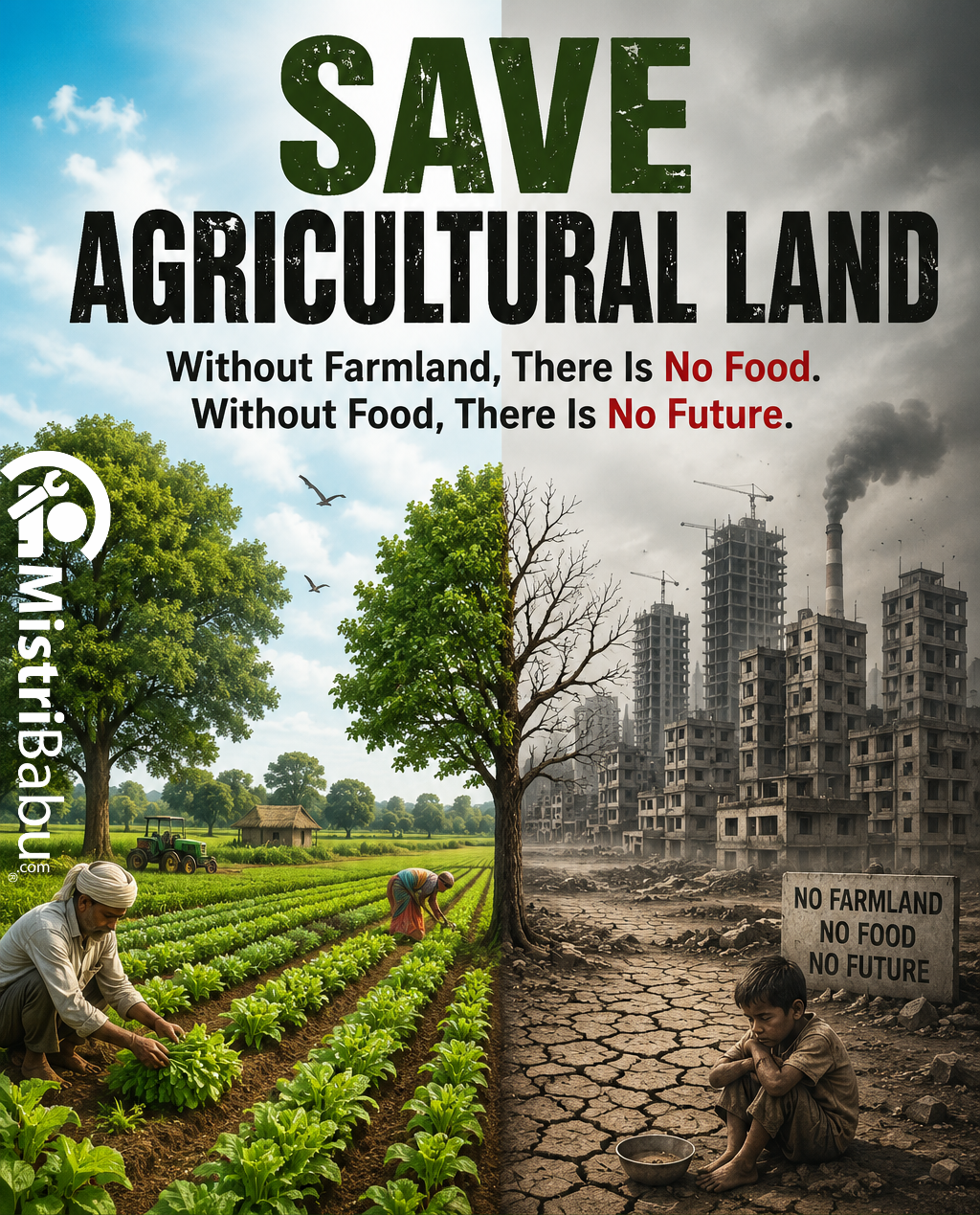
Save Agricultural Land Before It's Too Late
Agricultural land is one of the most valuable natural resources on Earth. It is the foundation of our food system, economy, environment, and rural livelihoods. Every grain of rice, wheat, vegetables, fruits, and pulses begins its journey from fertile farmland. However, rapid urbanization, industrial expansion, and unplanned real estate development are causing thousands of acres of productive agricultural land to disappear every year.
The question is no longer "Should we save agricultural land?" but rather "What will happen if we don't?"
The consequences of losing farmland are severe and will affect every person—whether they live in a village, town, or city.
Why Agricultural Land Matters
Agricultural land is much more than open fields. It provides:
- Food for millions of people
- Employment for farmers and agricultural workers
- Livelihood for rural communities
- Environmental balance
- Groundwater recharge
- Biodiversity conservation
- Oxygen through trees and vegetation
- Economic stability for the nation
Without healthy farmland, society cannot sustain itself.
What Will Happen If Agricultural Land Disappears?
1. Food Shortage
The most immediate impact will be food scarcity.
If fertile farmland is converted into buildings, industries, or highways, there will be less land available to grow food.
This means:
- Lower crop production
- Higher dependence on imports
- Food supply disruptions
- Reduced food security
Eventually, countries may struggle to feed their growing populations.
2. Food Prices Will Increase
Less farmland means lower production.
Lower production leads to:
- Expensive vegetables
- Expensive rice
- Expensive wheat
- Expensive fruits
- Expensive milk and meat
Basic food items may become unaffordable for many families.
Poor households will suffer the most.
3. Farmers Will Lose Their Livelihood
Millions of farmers depend on agriculture.
When farmland is sold or acquired for construction:
- Farmers lose income
- Agricultural workers become unemployed
- Rural migration increases
- Traditional farming knowledge disappears
Many farming families may be forced into low-paying urban jobs.
4. Increase in Hunger and Malnutrition
Without sufficient food production:
- Children suffer malnutrition.
- Elderly people become vulnerable.
- Poor families skip meals.
- Nutrition levels decline.
Food insecurity can create long-term health problems across generations.
5. Environmental Damage
Agricultural land supports nature.
Replacing farmland with concrete causes:
- Loss of greenery
- Rising temperatures
- Reduced rainfall
- Poor air quality
- Soil degradation
- Increased pollution
Green fields help regulate climate naturally.
6. Groundwater Levels Will Fall
Farmland allows rainwater to seep into the ground.
When land is covered with concrete:
- Rainwater runs off quickly.
- Groundwater recharge decreases.
- Wells dry up.
- Water shortages become common.
Future generations may struggle to access clean water.
7. Loss of Biodiversity
Agricultural ecosystems support:
- Birds
- Bees
- Butterflies
- Earthworms
- Beneficial insects
- Small animals
Urban expansion destroys these habitats, reducing biodiversity and affecting pollination, which is essential for crop production.
8. Climate Change Will Worsen
Agricultural land stores carbon and supports vegetation.
When converted into buildings:
- Carbon emissions increase.
- Heat islands develop.
- Flood risks increase.
- Natural cooling disappears.
Protecting farmland is also a way to fight climate change.
9. Increased Flooding
Open agricultural fields absorb rainfall.
Concrete surfaces cannot.
As a result:
- Flash floods increase.
- Urban drainage systems become overloaded.
- Property damage rises.
- Lives are put at risk.
Natural farmland acts as a sponge during heavy rainfall.
10. Loss of National Food Security
Every nation depends on domestic food production.
If agricultural land keeps shrinking:
- Imports increase.
- Foreign dependency rises.
- Food becomes vulnerable to international crises.
- National security is affected.
Food security is as important as economic security.
Why Is Agricultural Land Being Lost?
Several factors contribute to farmland loss:
- Rapid urbanization
- Housing projects
- Industrial development
- Illegal land conversion
- Commercial real estate
- Roads and infrastructure
- Mining activities
- Poor land-use planning
Development is important, but it should not come at the cost of fertile agricultural land.
How Can We Save Agricultural Land?
Everyone has a role to play.
Government
- Enforce strict land-use policies.
- Prevent illegal land conversion.
- Protect fertile agricultural zones.
- Support sustainable farming.
Farmers
- Continue sustainable agriculture.
- Avoid selling productive farmland unless necessary.
- Adopt modern farming techniques.
Citizens
- Support local farmers.
- Buy locally grown food.
- Raise awareness.
- Avoid encouraging unnecessary conversion of farmland.
Communities
- Plant trees around farmland.
- Protect irrigation systems.
- Promote water conservation.
- Educate future generations about agriculture.
Sustainable Development Is the Answer
Development and agriculture can coexist.
Smart planning includes:
- Vertical urban development
- Use of barren land for industries
- Protection of fertile farmland
- Eco-friendly infrastructure
- Balanced rural and urban planning
The goal should be development without destroying food-producing land.
A Message for Future Generations
The farmland we protect today will feed tomorrow's children.
Once fertile land is covered with concrete, it is almost impossible to restore its original productivity.
Every acre of farmland lost today reduces tomorrow's food supply.
Saving agricultural land is not just the responsibility of farmers—it is the responsibility of every citizen.
Conclusion
Agricultural land is the backbone of civilization. Without it, food shortages, rising prices, unemployment, environmental degradation, water scarcity, biodiversity loss, and climate challenges will become more severe.
Protecting farmland is an investment in food security, economic stability, and a healthier planet.
Remember:
No Farms → No Food → No Future
Every field saved today helps ensure that future generations inherit a world where food is abundant, nature thrives, and communities prosper.
Final Call to Action
? Save Agricultural Land.
? Support Farmers.
? Protect Nature.
? Secure Food for Future Generations.
Because without farmland, there is no food—and without food, there is no future.

MistriBabu
Admin