
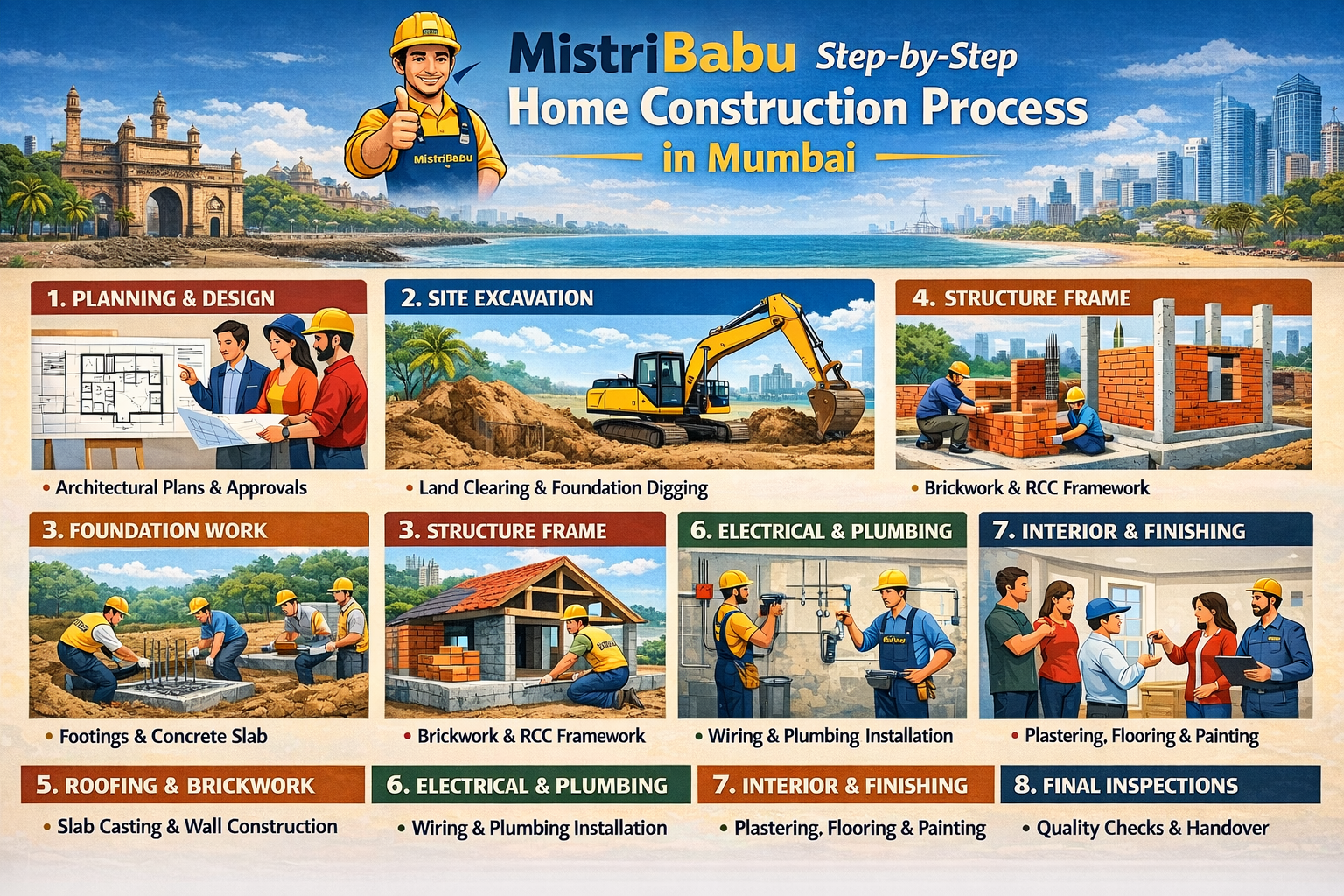
Building your dream home in Mumbai is a major investment. Whether you are planning an independent bungalow, villa, duplex, or redevelopment project, understanding the complete construction process helps you avoid legal issues, delays, and cost overruns.
Mumbai’s construction process is unique due to coastal climate, strict approvals, high land cost, and redevelopment regulations.
This guide explains the step-by-step home construction process in Mumbai, covering all major locations and FAQs.
Major Residential Locations in Mumbai
Home construction projects are common in:
South Mumbai
-
Colaba
-
Marine Drive
-
Malabar Hill
-
Worli
Western Suburbs
-
Bandra
-
Andheri
-
Juhu
-
Goregaon
-
Malad
-
Kandivali
-
Borivali
Central & Eastern Suburbs
-
Powai
-
Ghatkopar
-
Mulund
-
Chembur
-
Kurla
Navi Mumbai Region
-
Navi Mumbai
-
Vashi
-
Nerul
-
Kharghar
-
Panvel
Each location has different regulations, FSI norms, and approval procedures.
Step 1: Land Verification & Legal Due Diligence
Before construction:
-
Verify clear title
-
Check CRZ (Coastal Regulation Zone) restrictions
-
Confirm zoning & land use
-
Verify FSI (Floor Space Index) limits
-
Check redevelopment permissions (if applicable)
In Mumbai, approvals are generally governed by BMC or CIDCO (for Navi Mumbai).
⚠️ Legal verification is extremely important in Mumbai due to strict regulations.
Step 2: Soil Testing & Structural Planning
Mumbai has coastal soil in many areas, especially in South Mumbai and Navi Mumbai.
Soil testing helps determine:
-
Foundation type (pile foundation often required)
-
Safe bearing capacity
-
Waterproofing needs
-
Structural load planning
Skipping soil testing can lead to settlement and leakage problems.
Step 3: Architectural Design & Planning
This stage includes:
-
Requirement discussion
-
Budget estimation
-
2D floor planning
-
3D elevation design
-
Structural design
-
MEP (Mechanical, Electrical, Plumbing) design
-
Vastu (if required)
In Mumbai, smart space planning is crucial due to high land cost.
Step 4: Plan Approval & Permissions
Before construction:
-
Submit architectural drawings
-
Structural safety certificate
-
Fire NOC (if required)
-
Environmental clearance (if needed)
-
Authority approval
Unauthorized construction in Mumbai can result in heavy penalties.
Step 5: Site Preparation & Layout
After approval:
-
Demolition (if redevelopment)
-
Site clearing
-
Temporary fencing
-
Layout marking
-
Borewell planning (if allowed)
Step 6: Foundation Work
Due to soil conditions, foundation in Mumbai may involve:
-
Excavation
-
PCC
-
Pile foundation (if required)
-
Footing reinforcement
-
Concrete pouring
Proper waterproofing is essential due to heavy rainfall.
Step 7: RCC Structure Construction
Most homes in Mumbai are RCC structures.
Includes:
-
Column casting
-
Beam casting
-
Slab shuttering
-
Slab reinforcement
-
Roof slab concrete (M25 grade often used)
Curing is critical for structural strength.
Step 8: Brickwork / Block Work
After slab curing:
-
External walls
-
Internal partition walls
-
Door & window frame installation
AAC blocks are commonly used for better insulation.
Step 9: Plumbing & Electrical Rough Work
Before plastering:
-
Concealed wiring
-
Plumbing lines
-
Drainage pipes
-
AC pipelines
-
Fire safety lines (if required)
Planning reduces future repair work.
Step 10: Plastering & Waterproofing
-
Internal plaster
-
External plaster
-
Terrace waterproofing
-
Bathroom waterproofing
Waterproofing is very important due to Mumbai’s heavy monsoon.
Step 11: Flooring & Tiling
-
Vitrified tiles
-
Marble flooring
-
Granite staircase
-
Bathroom wall tiles
-
Kitchen tiles
Premium homes in Bandra, Juhu, and Worli often use luxury marble.
Step 12: Doors, Windows & Fabrication
-
Main entrance door
-
Internal doors
-
UPVC / Aluminium windows
-
Glass railing & balconies
Quality fittings improve durability in coastal weather.
Step 13: Painting & Finishing
-
2 coats putty
-
1 coat primer
-
2 coats interior paint
-
Weather-resistant exterior paint
Anti-fungal paint is recommended due to humidity.
Step 14: Interior & Modular Work
-
False ceiling
-
Modular kitchen
-
Wardrobes
-
Lighting fixtures
-
Decorative elements
Step 15: Final Fixtures & Testing
-
Sanitary fittings
-
Electrical fittings
-
Water tank installation
-
Pump testing
-
Final inspection
Step 16: Final Inspection & Handover
Before handover:
-
Structural inspection
-
Waterproofing check
-
Plumbing testing
-
Electrical safety inspection
You receive:
-
Completion certificate
-
Occupancy certificate
-
Warranty documents
Estimated Construction Timeline in Mumbai
| House Size | Duration |
|---|---|
| 1000–1500 sq.ft | 8–10 months |
| 1500–3000 sq.ft | 10–14 months |
| 3000+ sq.ft | 12–18 months |
Estimated Construction Cost in Mumbai (2026)
-
Basic: ₹2,500–₹3,200 per sq.ft
-
Premium: ₹3,200–₹4,500 per sq.ft
-
Luxury: ₹4,500+ per sq.ft
Cost varies by location and material selection.
1. How long does it take to build a house in Mumbai?
Typically 8–14 months depending on approvals and project size.
2. Is pile foundation required in Mumbai?
In many coastal and soft soil areas, pile foundation is recommended after soil testing.
3. What concrete grade is used in Mumbai residential construction?
M25 grade is commonly used for RCC structures.
4. Is waterproofing important in Mumbai?
Yes, due to heavy monsoon and humidity, waterproofing is critical.
5. Do I need approval before construction?
Yes. Plan approval from local authority (BMC or CIDCO) is mandatory.
Conclusion
Constructing a home in Mumbai requires detailed planning, strict legal compliance, strong structural design, and proper waterproofing. Following a step-by-step construction process ensures quality, durability, and long-term safety.
Whether you are building in Bandra, Andheri, Powai, Navi Mumbai, or South Mumbai, professional supervision is key to successful project completion.

MistriBabu
Admin