
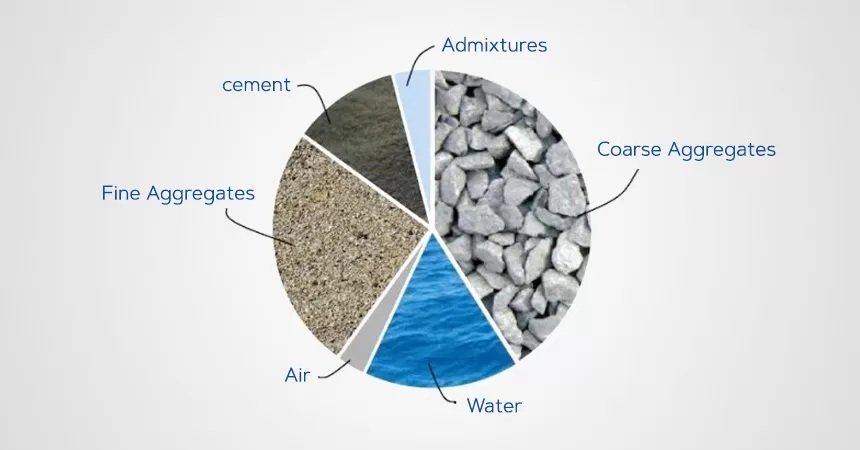
Concrete is the backbone of modern construction. From house foundations to bridges and commercial buildings, the strength of any structure depends largely on the correct concrete mixture ratio. In growing construction regions like Odisha, using the right ratio is essential due to climate, soil conditions, and building load requirements.
What is Concrete Mixture Ratio?
Concrete mixture ratio means the proportion of materials used to make concrete:
Cement : Sand : Aggregate (Stone Chips) : Water
This ratio determines:
-
Strength of concrete
-
Durability of structure
-
Crack resistance
-
Load bearing capacity
Concrete is widely used in construction projects across India for residential, commercial, and infrastructure development.
Standard Concrete Mixture Ratios Used in Construction
1. PCC (Plain Cement Concrete)
Used for:
-
Flooring base
-
Foundation base
-
Road base layer
Common Ratio:
? 1 : 4 : 8
2. RCC (Reinforced Cement Concrete)
Used for:
-
Columns
-
Beams
-
Slabs
-
Footings
Common Ratios:
? M15 → 1 : 2 : 4
? M20 → 1 : 1.5 : 3
? M25 → Design mix (Engineering based)
Meaning of M Grade Concrete
| Grade | Strength | Usage |
|---|---|---|
| M10 | Low | PCC works |
| M15 | Medium | Small houses |
| M20 | Standard | Residential construction |
| M25+ | High | Commercial & heavy load structures |
Water-Cement Ratio Importance
Ideal Water Cement Ratio:
? 0.40 – 0.60
Too much water = Weak concrete
Too little water = Poor workability
Why Correct Concrete Ratio is Important in Odisha
Odisha has:
-
High rainfall zones
-
Coastal humidity areas
-
Mixed soil types
Proper concrete ratio prevents:
-
Dampness
-
Structural cracks
-
Early strength loss
Concrete Usage Across All Districts of Odisha
Concrete construction is widely used across all districts:
-
Angul
-
Balangir
-
Balasore
-
Bargarh
-
Bhadrak
-
Boudh
-
Cuttack
-
Deogarh
-
Dhenkanal
-
Gajapati
-
Ganjam
-
Jagatsinghpur
-
Jajpur
-
Jharsuguda
-
Kalahandi
-
Kandhamal
-
Kendrapara
-
Kendujhar
-
Khordha
-
Koraput
-
Malkangiri
-
Mayurbhanj
-
Nabarangpur
-
Nayagarh
-
Nuapada
-
Puri
-
Rayagada
-
Sambalpur
-
Subarnapur
-
Sundargarh
Site Mixing vs Ready Mix Concrete (RMC)
Site Mix Concrete
✔ Low cost
✔ Good for small projects
Ready Mix Concrete
✔ High quality
✔ Consistent strength
✔ Faster construction
Common Mistakes in Concrete Mixing
❌ Extra water added
❌ Wrong sand quality
❌ Poor aggregate size selection
❌ Improper curing
Concrete Curing Time
Minimum curing:
-
PCC → 7 days
-
RCC → 14 – 28 days
Proper curing increases strength and life of structure.
1. Which concrete ratio is best for house construction?
M20 (1:1.5:3) is commonly used for residential RCC work.
2. Can we change concrete ratio on site?
Small adjustments possible, but major changes should be done only with engineer approval.
3. Why is M20 concrete popular in India?
Because it provides good strength and is cost effective for houses.
4. What happens if water is more in concrete?
Concrete strength reduces and cracks may develop.
5. Is hand mixing concrete good?
Only for small works. Machine mixing is better for uniform strength.
6. How much cement needed for 1 cubic meter M20 concrete?
Approx. 8 bags (depends on mix design).
7. Which sand is best for concrete?
River sand or M-sand (good quality) is recommended.
8. What is minimum concrete grade for footing?
M20 is recommended for RCC footing.
9. Can concrete be used in rainy season?
Yes, but with proper protection and curing management.
10. How long concrete takes to gain full strength?
Around 28 days.
Conclusion
Concrete mixture ratio is one of the most important factors in construction quality. Using the right ratio ensures strong, durable, and safe buildings across Odisha districts. Whether building a house, apartment, or commercial building, correct concrete mixing is essential for long-term performance.

MistriBabu
Admin