
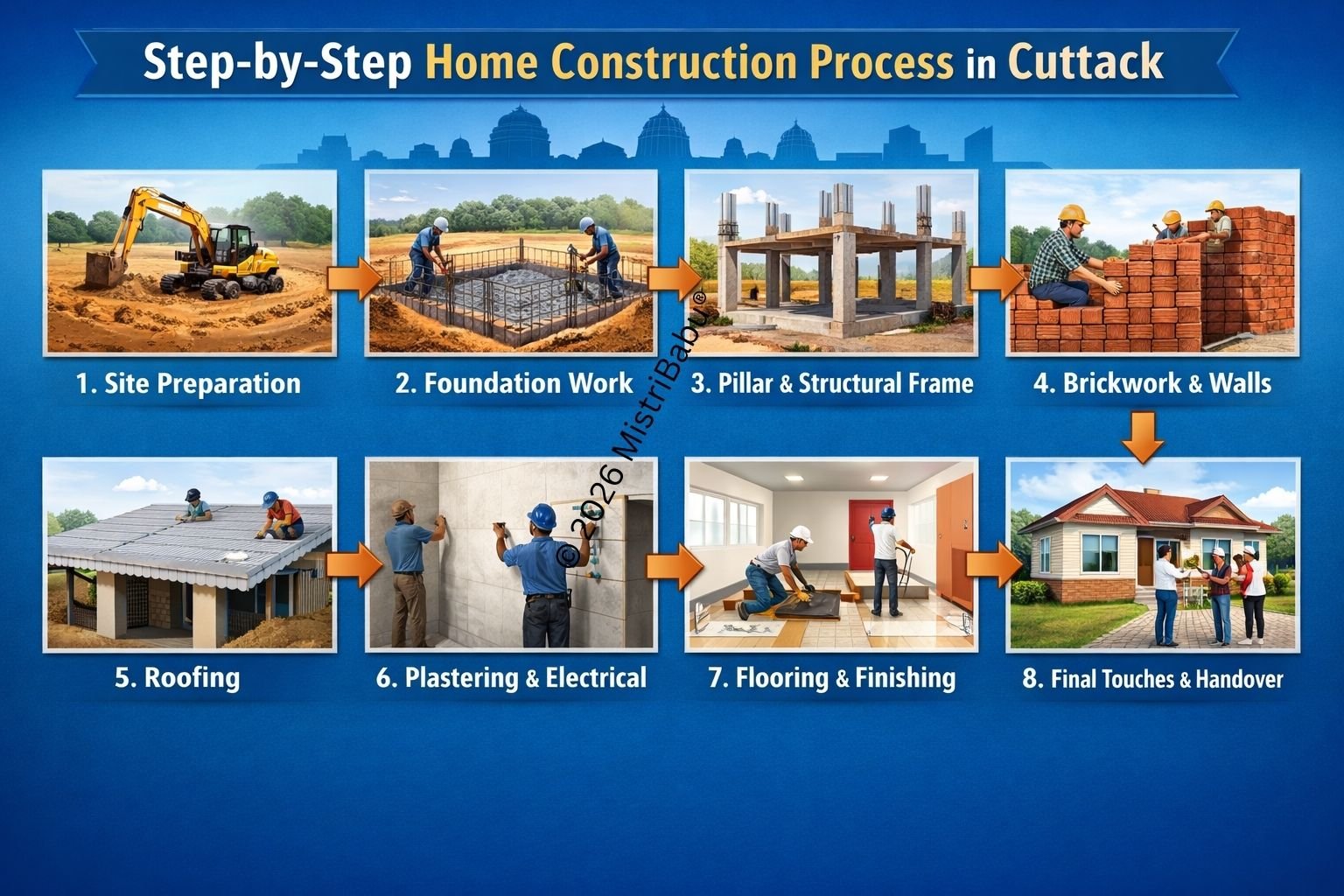
Building your dream home in Cuttack is a major milestone. Known as the Silver City of Odisha, Cuttack has a mix of traditional neighborhoods and rapidly developing residential zones. Whether you're planning an independent house, duplex, or G+2 building, understanding the full construction process helps ensure quality, safety, and compliance.
Residential construction is growing across areas like CDA Sector 6, CDA Sector 7, Mahanadi Vihar, Bidansi, Buxi Bazaar, Choudhury Bazar, Jobra, Badambadi, Tulasipur, and Kalyani Nagar.
Each locality may have different soil conditions and approval processes, so planning carefully is essential.
Step 1: Land Verification & Legal Clearance
Before construction begins:
-
Verify land title and ownership documents
-
Check land use classification
-
Ensure road access and drainage connectivity
-
Confirm no legal disputes
-
Verify electricity and water availability
Local building approvals in Cuttack are generally managed through municipal authorities and development bodies.
Step 2: Soil Testing & Site Survey
Cuttack’s proximity to rivers like Mahanadi means soil conditions can vary significantly.
Soil testing helps determine:
-
Safe bearing capacity
-
Required foundation type
-
Foundation depth
-
Structural safety measures
Skipping this step can result in long-term structural problems.
Step 3: Architectural Planning & Design
This is where your dream takes shape.
Includes:
-
Requirement discussion
-
Budget planning
-
2D floor plan design
-
3D elevation design
-
Structural drawings
-
Electrical & plumbing layouts
-
Vastu planning (if required)
In areas like CDA and Mahanadi Vihar, homeowners often prefer modern elevation designs with proper ventilation due to humid climate conditions.
Step 4: Building Plan Approval
Before starting construction:
-
Submit architectural drawings
-
Structural stability certificate
-
Land documents
-
Apply for building approval
Unauthorized construction may lead to penalties or demolition notices.
Step 5: Site Preparation & Layout Marking
After approval:
-
Site cleaning
-
Temporary fencing
-
Borewell planning (if required)
-
Layout marking as per plan
-
Level checking
Engineers ensure column and footing positions are correctly marked.
Step 6: Foundation Work
Foundation is crucial, especially in areas prone to waterlogging.
Process:
-
Excavation
-
PCC (Plain Cement Concrete)
-
Footing reinforcement
-
Concrete pouring
-
Column casting
Depending on soil conditions, isolated footing or raft foundation may be used.
Step 7: Plinth Beam & Anti-Termite Treatment
-
Plinth beam casting
-
Anti-termite chemical treatment
-
Backfilling & compaction
-
Plinth filling
This protects the building from moisture and pest damage.
Step 8: RCC Structure Construction
Most homes in Cuttack use RCC framed structures.
Includes:
-
Column construction
-
Beam casting
-
Slab reinforcement
-
Roof slab casting
Proper curing for at least 14–21 days ensures strength.
Step 9: Brickwork / Block Work
After slab curing:
-
External walls
-
Internal partition walls
-
Door & window frame placement
Red bricks are commonly used, though AAC blocks are becoming popular.
Step 10: Electrical & Plumbing Rough Work
Before plastering:
-
Electrical conduit installation
-
Switch box fitting
-
Water supply lines
-
Drainage lines
-
Septic tank construction (if required)
Proper slope planning is essential in low-lying areas.
Step 11: Plastering Work
-
Internal wall plaster
-
External wall plaster
-
Ceiling plaster
Ensures smooth finishing.
Step 12: Flooring & Tiling
-
Vitrified tiles
-
Ceramic tiles for bathrooms
-
Granite for staircase
-
Anti-skid tiles for terraces
Humidity-resistant materials are recommended.
Step 13: Doors & Windows Installation
-
Main entrance door
-
Internal doors
-
UPVC or aluminum windows
-
Balcony railings
Proper sealing is important during monsoon seasons.
Step 14: Painting & Exterior Finishing
-
Wall putty
-
Primer coat
-
Interior paint
-
Exterior weather-resistant paint
Waterproof exterior paint is highly recommended in Cuttack’s climate.
Step 15: Interior Work & Fixtures
-
Modular kitchen
-
Wardrobes
-
False ceiling
-
Sanitary fittings
-
Electrical switches & lights
Step 16: Final Inspection & Handover
Before handover:
-
Structural inspection
-
Electrical safety check
-
Plumbing leakage test
-
Final cleaning
Documents provided:
-
Completion certificate
-
Occupancy certificate
-
Warranty documents
Estimated Construction Timeline in Cuttack
| House Size | Estimated Duration |
|---|---|
| 1000–1500 sq.ft | 6–8 months |
| 1500–2500 sq.ft | 8–10 months |
| 2500+ sq.ft | 10–12 months |
Estimated Construction Cost in Cuttack (2026)
-
Basic Construction: ₹1,600 – ₹2,100 per sq.ft
-
Premium Construction: ₹2,100 – ₹2,800 per sq.ft
-
Luxury Construction: ₹2,800+ per sq.ft
Costs vary based on material quality and design complexity.
1. How long does it take to build a house in Cuttack?
Typically 6 to 12 months depending on size and weather conditions.
2. Is soil testing necessary in Cuttack?
Yes. Due to varying soil and water table levels, soil testing is highly recommended.
3. What type of foundation is best in Cuttack?
It depends on soil test results. In water-prone areas, raft foundations are sometimes preferred.
4. What is the average cost per sq.ft in Cuttack?
Construction cost ranges from ₹1,600 to ₹2,800+ per sq.ft depending on finish level.
5. Do I need building approval before construction?
Yes, building plan approval is mandatory before starting construction.
Conclusion
Constructing a home in Cuttack requires proper planning, soil analysis, legal approvals, and professional supervision. From foundation to finishing, each step plays a vital role in ensuring durability and safety.
Whether you are building in CDA, Mahanadi Vihar, Bidansi, Tulasipur, or Kalyani Nagar, following a structured construction process guarantees a stress-free and successful home-building journey.

MistriBabu
Admin