
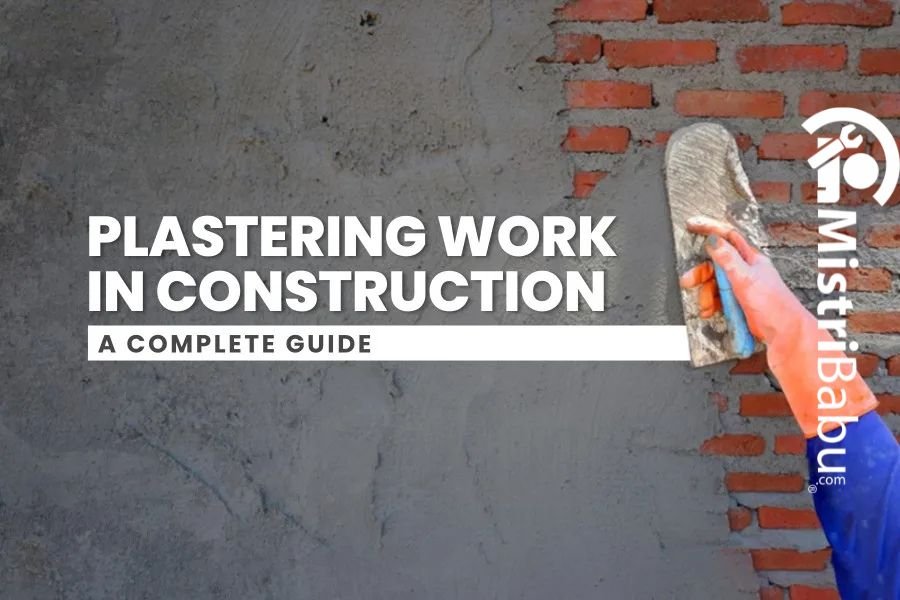
Plastering is one of the most important finishing processes in construction. A proper plastering ratio ensures strength, durability, smooth finish, and long-lasting walls. If the cement-sand ratio is incorrect, it can lead to cracks, poor bonding, and surface damage over time.
In this detailed guide, we will explain how to calculate plastering ratio, how to measure material quantity, and what ratio is best for different types of plastering work.
What is Plastering Ratio?
The plastering ratio refers to the proportion of cement and sand used in preparing mortar for plastering work.
It is written in the format:
Cement : Sand
Example: 1:4 (1 part cement and 4 parts sand)
The ratio depends on:
-
Type of surface (internal or external wall)
-
Thickness of plaster
-
Required strength
-
Climate conditions
Standard Plastering Ratios
Here are commonly used plastering ratios in construction:
1. Internal Wall Plaster
-
Recommended Ratio: 1:6 (Cement : Sand)
-
Used for smooth finishing inside rooms
-
Provides sufficient strength and smooth texture
2. External Wall Plaster
-
Recommended Ratio: 1:4 or 1:5
-
Stronger mix required for weather resistance
-
Protects walls from rain and moisture
3. Ceiling Plaster
-
Recommended Ratio: 1:3 or 1:4
-
Requires stronger bonding to prevent falling
4. Bathroom / Damp Area Plaster
-
Recommended Ratio: 1:3
-
Higher cement content for water resistance
How to Calculate Plastering Quantity (Step-by-Step)
Let’s understand with an example.
Step 1: Calculate Wall Area
Formula:
Area = Length × Height
Example:
-
Wall Length = 10 meters
-
Height = 3 meters
Area = 10 × 3 = 30 sq.m
Step 2: Decide Plaster Thickness
Standard plaster thickness:
-
Internal walls = 12 mm (0.012 m)
-
External walls = 15 mm (0.015 m)
Assume thickness = 12 mm (0.012 m)
Step 3: Calculate Wet Volume of Plaster
Formula:
Wet Volume = Area × Thickness
Wet Volume = 30 × 0.012
= 0.36 cubic meters
Step 4: Convert to Dry Volume
Dry volume is increased by 30% to account for shrinkage and wastage.
Formula:
Dry Volume = Wet Volume × 1.30
Dry Volume = 0.36 × 1.30
= 0.468 cubic meters
Step 5: Calculate Cement and Sand Quantity
Assume plaster ratio = 1:6
Total parts = 1 + 6 = 7 parts
Cement Quantity
Cement = (1/7) × 0.468
= 0.0668 cubic meters
1 cement bag = 0.035 cubic meters
Number of cement bags:
0.0668 ÷ 0.035 ≈ 1.9 bags (approx. 2 bags)
Sand Quantity
Sand = (6/7) × 0.468
= 0.401 cubic meters
Quick Formula for Plaster Calculation
You can use this shortcut:
Cement Bags = (Area × Thickness × 1.3 × Cement Ratio) ÷ (Total Ratio × 0.035)
Important Points to Remember
✔ Always use clean, well-graded sand
✔ Maintain proper water-cement ratio
✔ Cure plaster for at least 7 days
✔ Avoid over-watering the mix
✔ Apply proper surface preparation before plastering
Why Proper Plastering Ratio is Important?
-
Prevents cracks
-
Improves bonding strength
-
Increases durability
-
Enhances surface finish
-
Protects structure from moisture
Incorrect plaster ratio can cause:
-
Hollow surface sound
-
Peeling plaster
-
Dampness issues
-
Early damage
Conclusion
Calculating the correct plastering ratio is essential for strong and durable construction. For internal walls, a 1:6 ratio is generally sufficient, while external and damp areas require stronger mixes like 1:4 or 1:3.
By following the correct calculation steps — area, thickness, wet volume, dry volume, and material ratio — you can accurately estimate cement and sand requirements and avoid material wastage.
Proper plastering not only improves appearance but also ensures long-term structural safety.

MistriBabu
Admin