
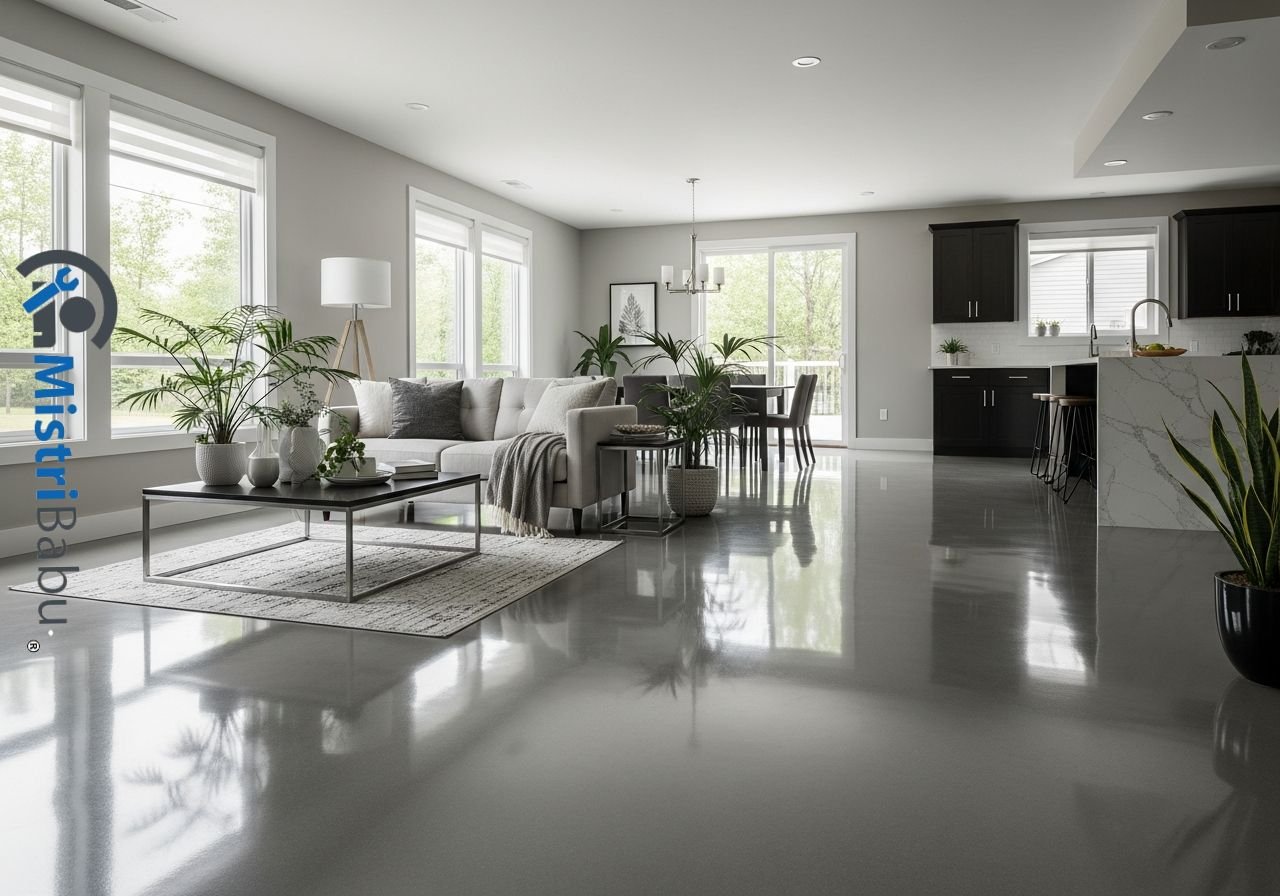
Epoxy flooring is no longer limited to factories and commercial spaces. In recent years, homeowners have started using epoxy floors in garages, basements, kitchens, and even living areas because of their durability, sleek finish, and modern appeal. But like any flooring option, epoxy comes with both benefits and drawbacks.
This blog explores what epoxy flooring is, why it’s gaining popularity in homes, and the advantages and disadvantages you should consider before choosing it.
What Is Epoxy Flooring?
Epoxy flooring is created by mixing resin and hardener, which chemically react to form a rigid, plastic-like surface when applied over concrete. Once cured, the floor becomes seamless, highly durable, and resistant to wear and tear.
Epoxy coatings can be customized in various colors, patterns, and finishes, including metallic, flake, matte, or high-gloss designs. Because of its smooth and polished look, epoxy flooring gives residential spaces a clean, modern, and industrial-inspired aesthetic.
2. Types of Epoxy Flooring for Homes
Homeowners can choose from several epoxy flooring styles depending on design and functional needs:
-
Solid Color Epoxy – Simple, clean, and minimalistic
-
Flake Epoxy Flooring – Decorative flakes add texture and slip resistance
-
Metallic Epoxy Flooring – Creates a glossy, marble-like effect
-
Quartz Epoxy Flooring – Textured and highly slip-resistant
-
Self-Leveling Epoxy – Ideal for uneven or damaged concrete floors
Each type varies in appearance, thickness, and cost.
Advantages of Epoxy Flooring for Homes
1. High Durability and Strength
Epoxy floors are extremely tough and can withstand heavy foot traffic, furniture movement, and even vehicle weight in garages. They resist cracks, chips, and surface damage better than many traditional flooring options.
2. Easy to Clean and Maintain
The seamless, non-porous surface prevents dust, dirt, and liquids from seeping in. Regular sweeping and occasional mopping are enough to keep epoxy floors looking new, making them ideal for busy households.
3. Moisture and Stain Resistance
Epoxy flooring is water-resistant and does not absorb spills, which helps prevent stains, mold, and mildew. This makes it a great option for basements, kitchens, laundry rooms, and garages.
4. Attractive and Customizable Appearance
From solid colors to decorative flakes and metallic finishes, epoxy flooring offers a wide range of design possibilities. Homeowners can achieve anything from a minimalist look to a bold, artistic statement.
5. Long Lifespan
When properly installed and maintained, epoxy flooring can last 10–20 years or more. Its longevity makes it a cost-effective option over time.
6. Chemical and Heat Resistance
Epoxy resists damage from household chemicals, oils, and cleaning products. It also tolerates heat well, which is useful in garages and workshops.
Disadvantages of Epoxy Flooring for Homes
1. Slippery When Wet
High-gloss epoxy surfaces can become slippery when wet. While anti-slip additives can reduce this risk, it’s still a consideration for bathrooms or homes with children and elderly residents.
2. Complex Installation Process
Epoxy flooring requires thorough surface preparation, including cleaning, repairing cracks, and ensuring proper moisture levels. Poor installation can lead to peeling or bubbling, so professional installation is often recommended.
3. Hard and Cold Underfoot
Epoxy floors are rigid and can feel cold, especially in winter. Unlike wood or vinyl, they offer little cushioning, which may be uncomfortable for standing long periods without rugs or mats.
4. Long Curing Time
After installation, epoxy floors need time to cure fully—anywhere from 24 hours to several days. During this period, the area cannot be used, which may be inconvenient.
5. Difficult to Repair or Remove
If epoxy flooring gets damaged or you want to change it later, repairs can be noticeable, and removal is labor-intensive. It usually requires grinding or professional equipment.
6. UV Sensitivity
Some epoxy coatings can yellow or fade over time when exposed to direct sunlight. UV-resistant topcoats can help, but they may increase overall cost.
Is Epoxy Flooring Right for Your Home?
Epoxy flooring is an excellent choice for homeowners looking for durability, low maintenance, and a modern look—especially in garages, basements, and utility areas. However, it may not be ideal for every room due to its hardness and slipperiness.
Before deciding, consider where the flooring will be installed, your lifestyle needs, and whether comfort or aesthetics is your top priority.

MistriBabu
Admin